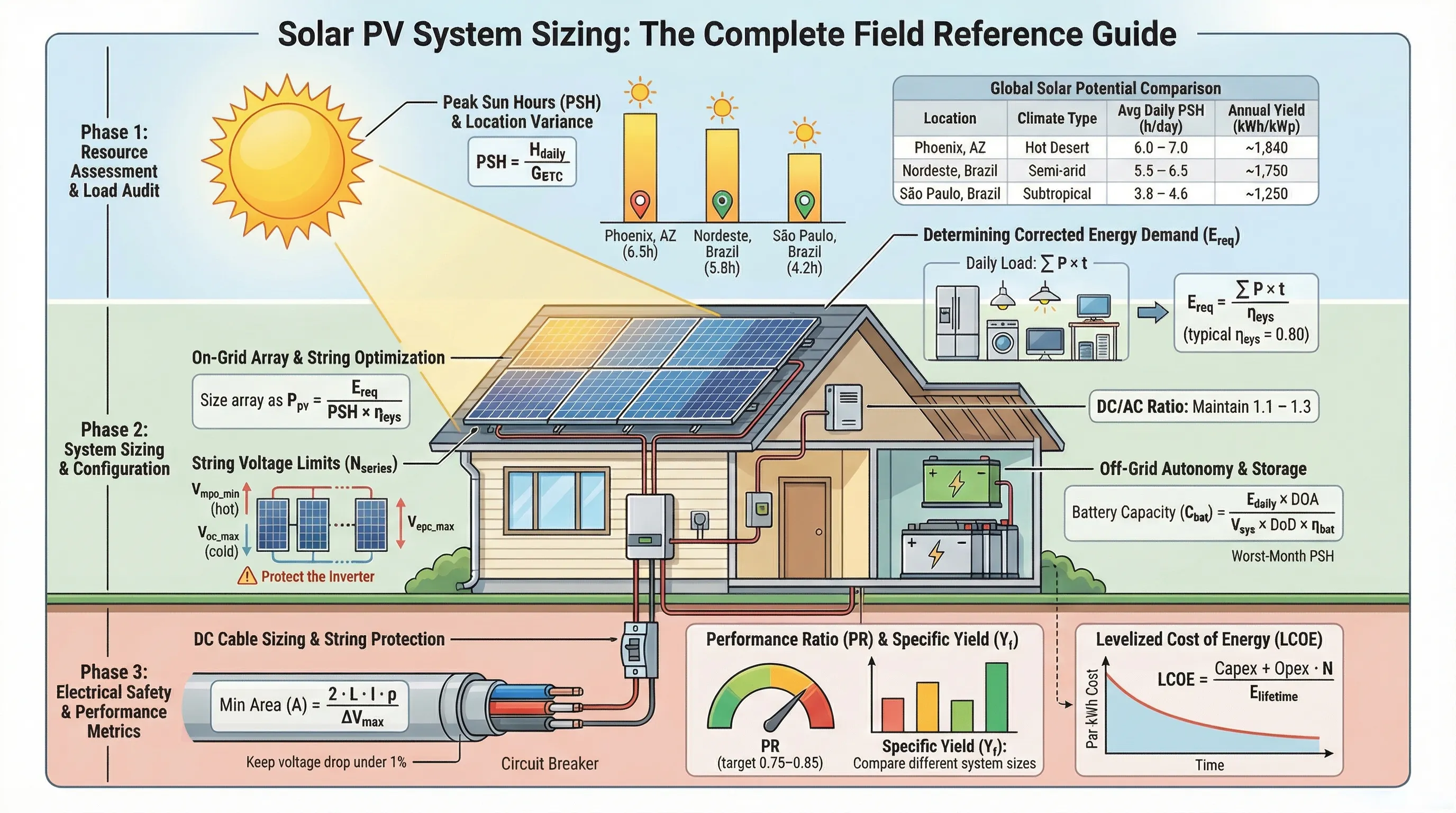
☀️ Designing a solar PV system is a precise engineering discipline — not just a panel count. A robust project flows through three critical phases: resource assessment and load auditing (calculating PSH and corrected energy demand), system sizing and configuration (array power, string voltage limits, DC/AC ratio between 1.1–1.3, and off-grid battery autonomy), and finally electrical safety with performance metrics (DC cable sizing, Performance Ratio targets of 0.75–0.85, and LCOE analysis). Every parameter is interconnected — a miscalculated string voltage can damage an inverter, while an undersized battery bank sized on average irradiance instead of worst-month PSH will fail the system exactly when reliability matters most. Getting these fundamentals right is what turns a solar installation into a long-term energy asset.
🌍 Location is destiny in solar — and the data is striking. Phoenix, AZ leads with 6.0–7.0 PSH and ~1,840 kWh/kWp annual yield, but Brazil's Nordeste region is right behind at 5.5–6.5 PSH and ~1,750 kWh/kWp, making it one of the most competitive solar territories on the planet. Even São Paulo's subtropical climate delivers ~1,250 kWh/kWp — enough to justify strong on-grid economics. As hybrid systems mature and storage costs fall, the opportunity to reduce electricity bills, expand energy access, and build resilient microgrids has never been greater. The engineers who master system sizing today are the ones who will lead this energy transition tomorrow.
#SolarEnergy #PhotovoltaicSystems #RenewableEnergy #SolarPV #EnergyTransition #CleanEnergy #SystemSizing #EnergyEngineering #SolarDesign #SustainableEngineering