


Introduction
An exploratory machine learning study investigating whether operational energy patterns may provide early insights into abnormal cooling behavior in data center environments.
Artificial intelligence is increasingly being discussed within the data center industry as operators search for new ways to improve operational visibility, energy efficiency, and infrastructure resilience.
Much of the attention surrounding AI in data centers focuses on predictive maintenance, automation, and energy optimization. However, another emerging area of interest is the potential use of machine learning techniques to better understand complex operational behaviors within cooling-intensive environments.
Methods
This article presents an exploratory analysis investigating whether operational energy variables may reveal patterns potentially associated with abnormal cooling behavior in a data center environment.
It is important to emphasize that this analysis is not intended to propose a definitive anomaly detection framework. Instead, the study is designed to explore the feasibility of applying machine learning techniques to identify operational patterns that may be associated with cooling-related behavior, while explicitly acknowledging methodological limitations.
The dataset used in this study is publicly available and was obtained from the U.S. Department of Energy Office of Scientific and Technical Information (OSTI Data Explorer), accessed on May 14, 2026.
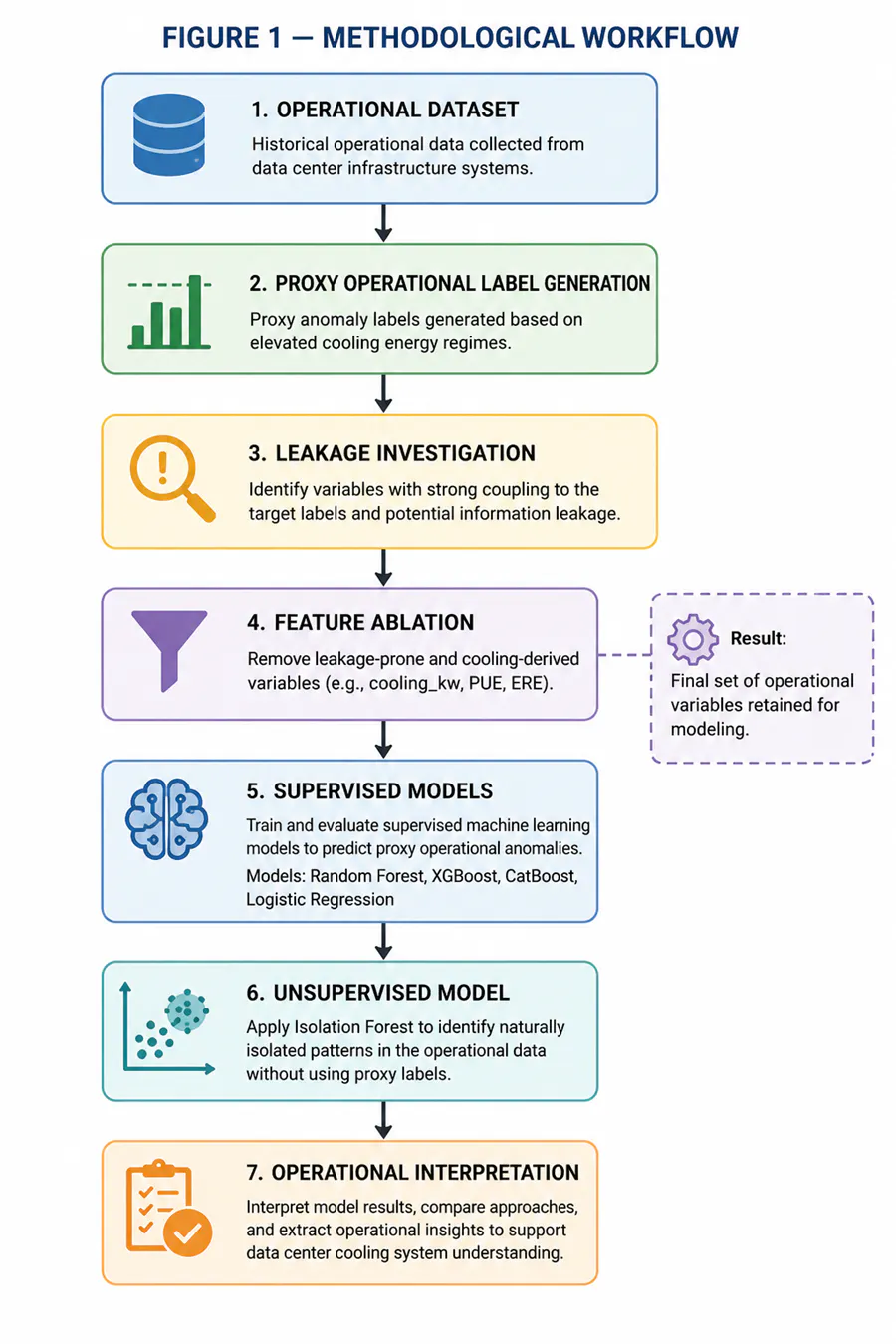
Proxy operational labels were constructed based on elevated cooling energy regimes. These labels represent constructed operational conditions rather than validated anomalies. As such, the results should be interpreted strictly within this exploratory context.
FIGURE 1 — Methodological Workflow
Distribution of anomaly scores generated by the Isolation Forest model, illustrating the continuous nature of deviations within the operational dataset.
Results
Below is a summary of the results obtained during this exploratory study.
TABLE 1 — Final Operational Variables
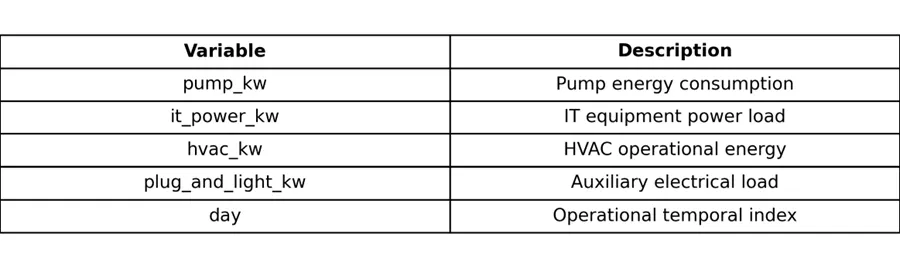
Operational variables used in the analysis after feature selection and removal of variables directly associated with cooling-derived metrics.
FIGURE 2 — Boxplot of cooling_kw by Operational Class
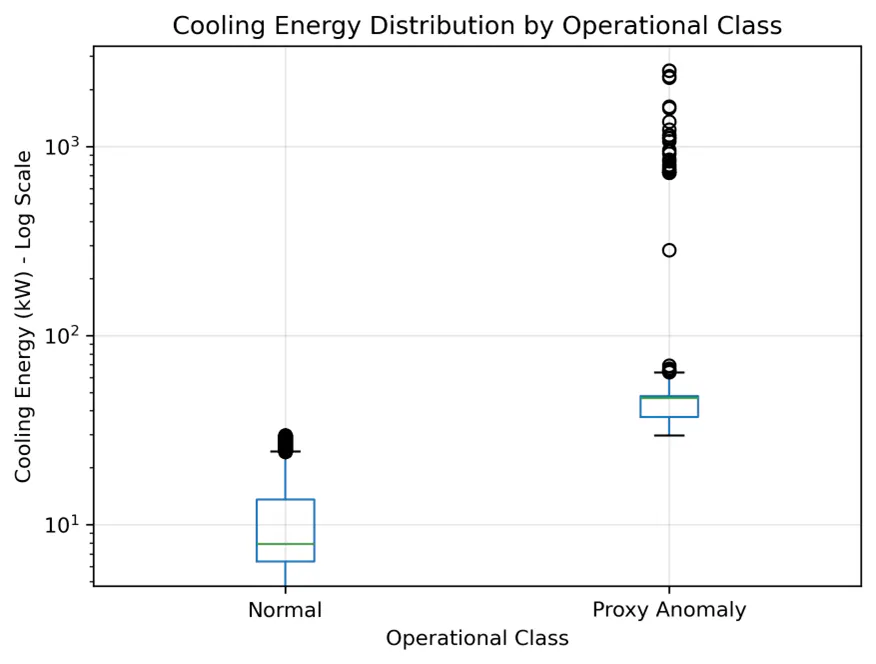
Distribution of cooling_kw across normal and proxy anomaly operational classes, highlighting differences in cooling-energy dispersion patterns within the analyzed dataset.
FIGURE 3 — Random Forest Feature Importance
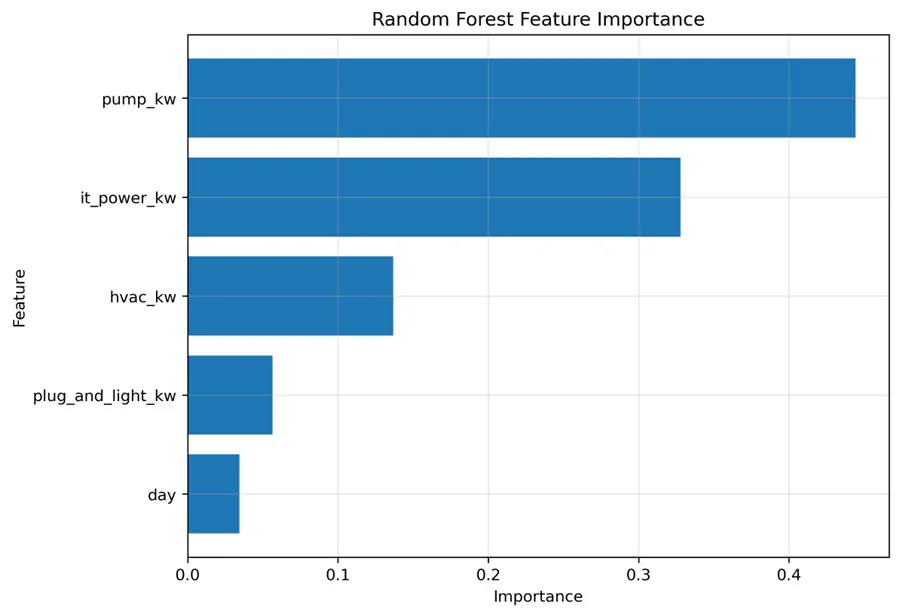
Relative feature importance derived from the Random Forest model, indicating the contribution of each operational variable to the proxy classification task.
FIGURE 4 — XGBoost Feature Importance
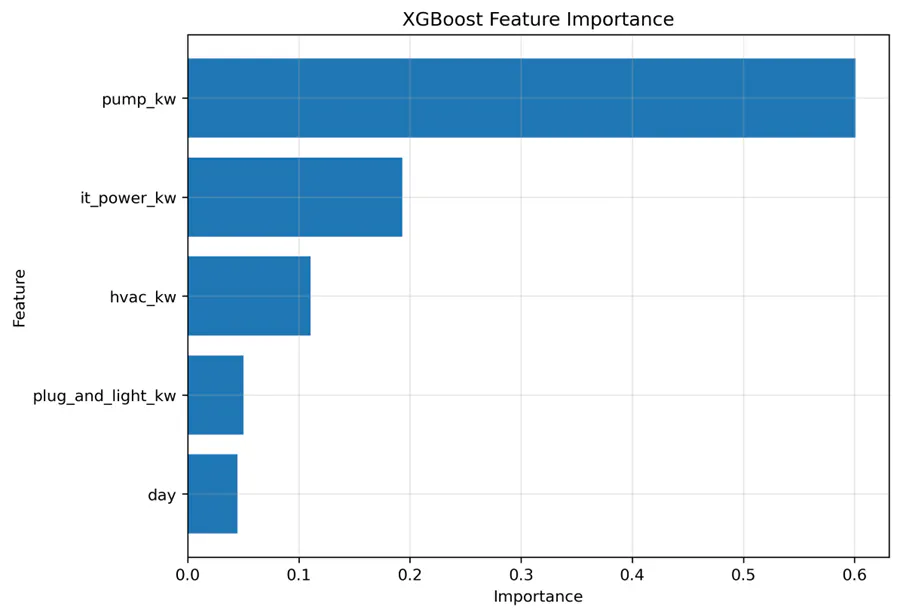
Feature importance scores obtained from the XGBoost model, illustrating the relative influence of operational variables in the classification of proxy cooling regimes.
FIGURE 5 — CatBoost Feature Importance
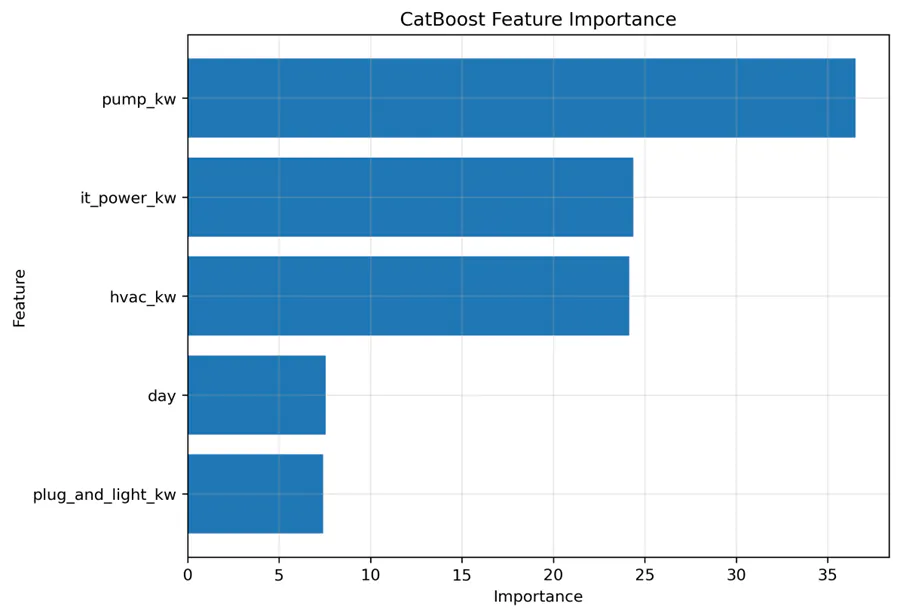
Feature importance distribution calculated using CatBoost, highlighting differences in variable weighting compared to other ensemble models.
TABLE 2 — Model Performance Comparison
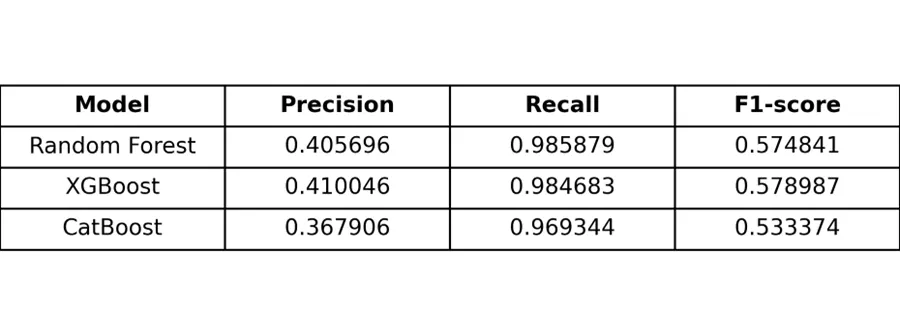
Performance metrics of supervised ensemble models used in the exploratory analysis, showing high recall and comparatively lower precision across models.
FIGURE 6 — Precision-Recall Curves
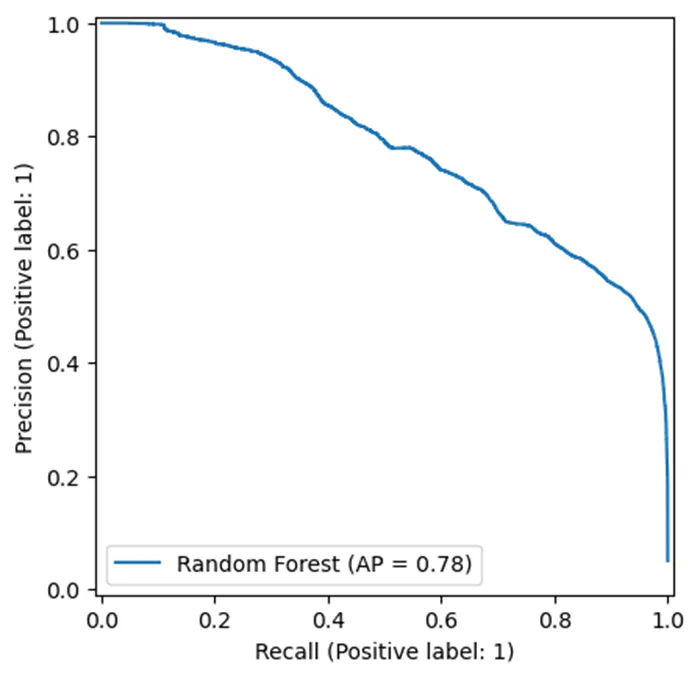
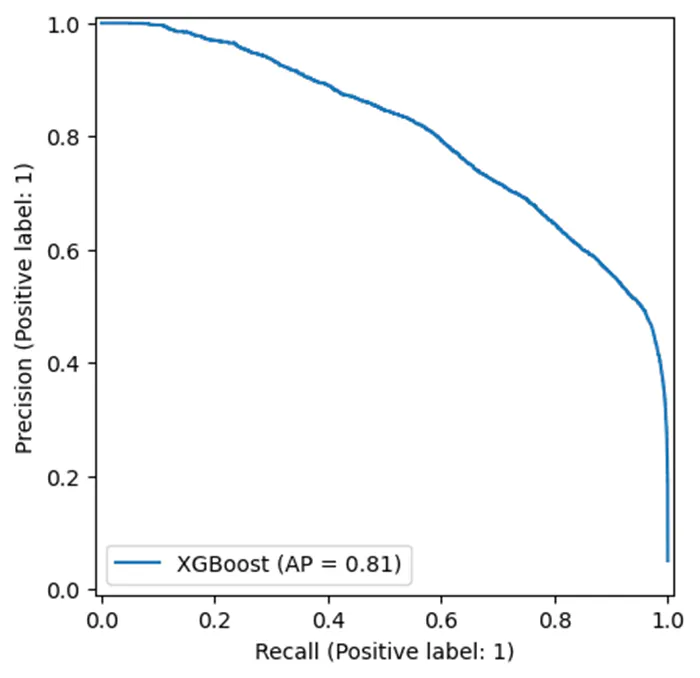
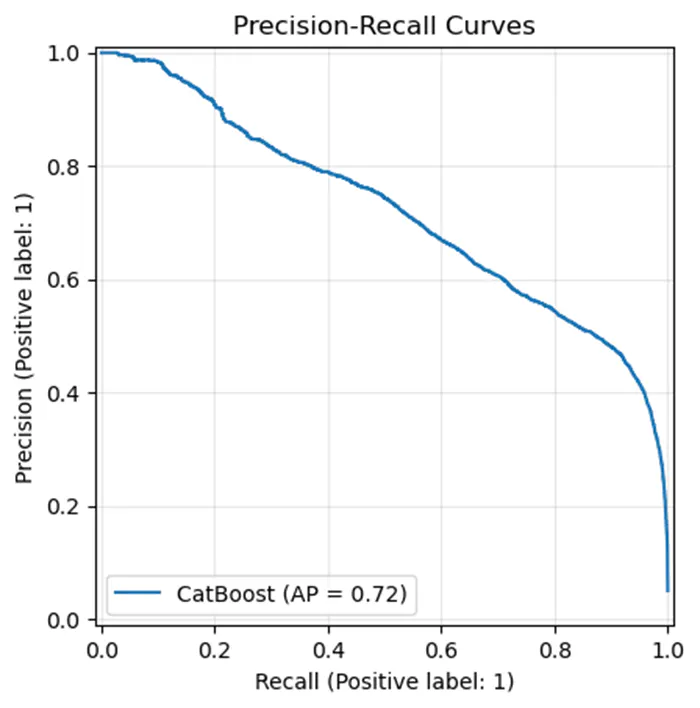
Precision-recall curves for the evaluated models, showing the relationship between precision and recall across different classification thresholds.
FIGURE 7 — XGBoost Confusion Matrix
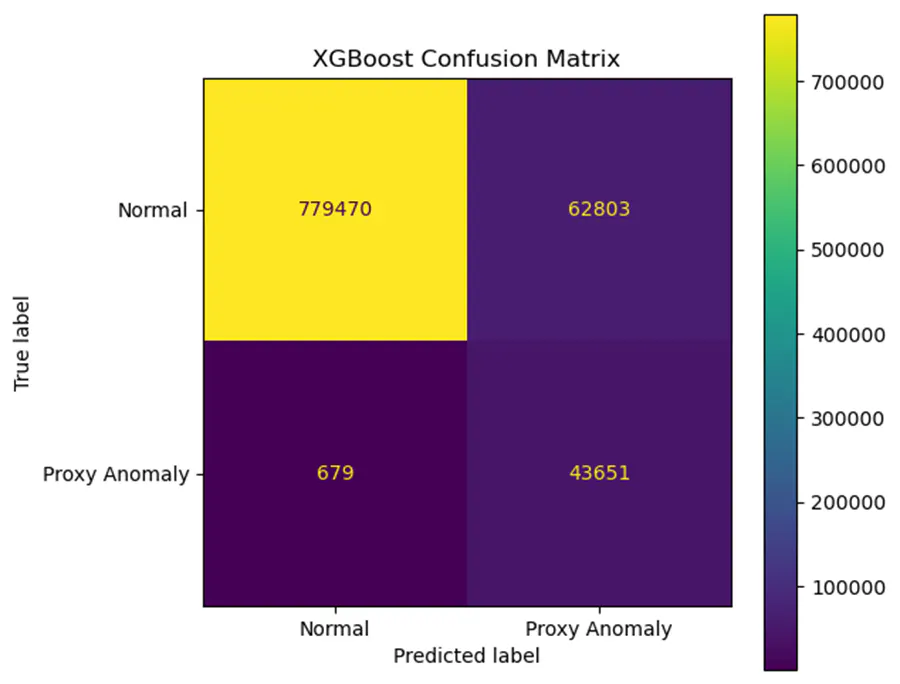
Confusion matrix of the XGBoost model, presenting the distribution of true positives, false positives, true negatives, and false negatives in the proxy classification task.
FIGURE 8 — Comparative Feature Importance Across Ensemble Models (Normalized)
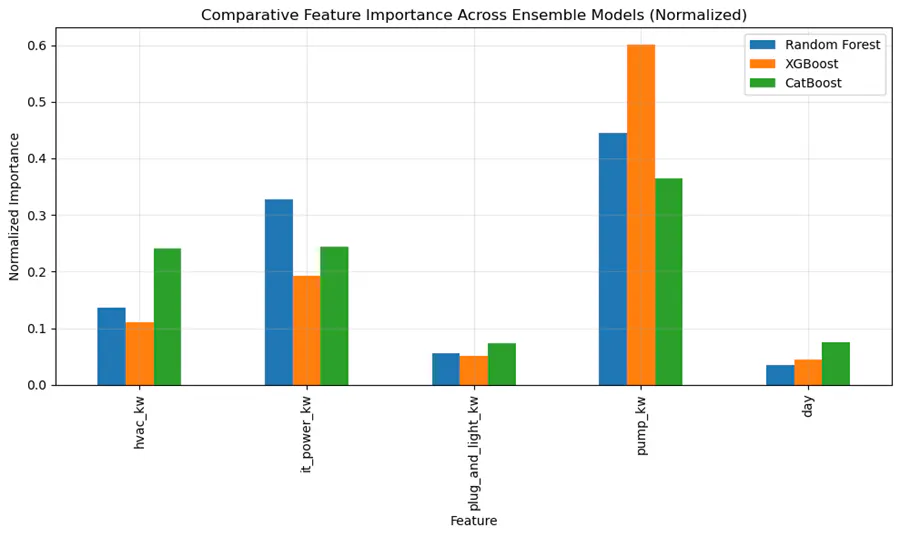
Normalized feature importance comparison across ensemble models, where importance values were rescaled to a common proportional scale to account for differences in model-specific importance metrics and enable consistent interpretation of variable relevance.
FIGURE 9 — Isolation Forest Anomaly Score Distribution
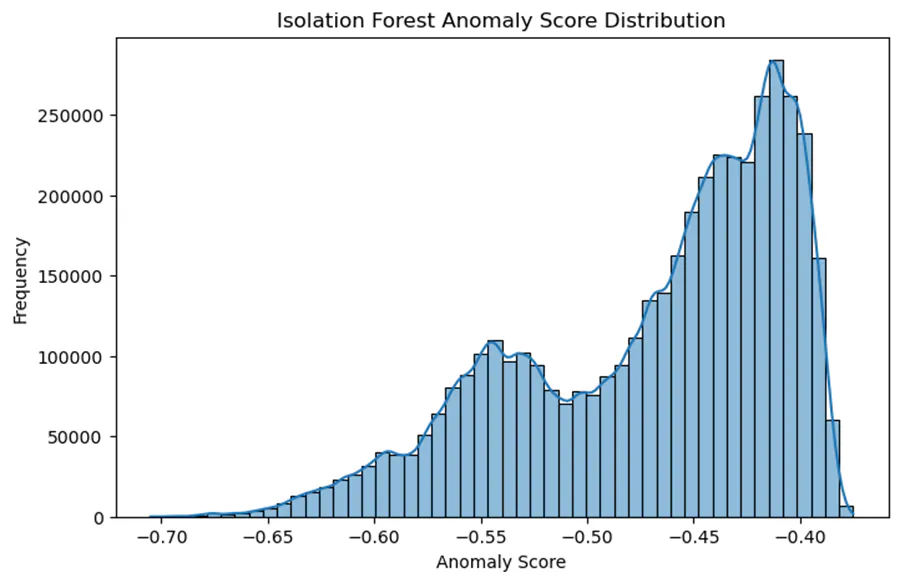
Distribution of anomaly scores generated by the Isolation Forest model, illustrating the continuous nature of deviations within the operational dataset.
Key Insight
The exploratory results suggest that cooling-related operational behavior in data centers may not present as clearly separable anomalous events. Instead, the observed patterns indicate that system behavior may evolve along a continuous operational spectrum, where deviations occur gradually rather than as discrete anomalies.
This interpretation is supported by both supervised and unsupervised modeling results, which consistently indicate high sensitivity to deviations but limited ability to sharply distinguish between normal and anomalous conditions.
Methodological Considerations and Limitations
The use of proxy labels based on energy regimes does not represent validated anomalous events, which limits the interpretability of classification outcomes.
Residual dependency between selected features and cooling behavior may introduce indirect information leakage.
Because the proxy operational labels were partially derived from cooling-related operational regimes, elevated recall values should not be interpreted as evidence of validated real-world anomaly detection capability.
Model performance is sensitive to threshold definition, particularly given the observed class imbalance and continuous behavior of the data.
Unsupervised results (Isolation Forest) indicate a continuous anomaly distribution, without clear cluster separation.
The absence of temporal validation and real operational fault data limits applicability in real-world deployments.
Feature importance results reflect correlation structures rather than causal relationships.
Missing data handling resulted in partial dataset exclusion during unsupervised modeling, which may influence score distributions.
Challenges and Future Directions
Future work may focus on incorporating validated operational fault events, temporal analysis, and deployment-oriented validation strategies to further assess the practical applicability of machine learning techniques in data center cooling systems.
Reference
U.S. Department of Energy – Office of Scientific and Technical Information (OSTI).
Data Center Operational Dataset.
Available at: https://www.osti.gov/dataexplorer/biblio/dataset/3015212
Accessed on: May 14, 2026.
Author
PhD Kleber Vânio Gomes Barros is a Brazilian Technologist and researcher focused on exploratory applications of artificial intelligence, operational analytics, energy systems, and infrastructure-related data analysis. He currently serves at the Secretariat of the National Council of Export Processing Zones (SECZPE), Ministry of Development, Industry, Commerce and Services (MDIC), Brazil.