


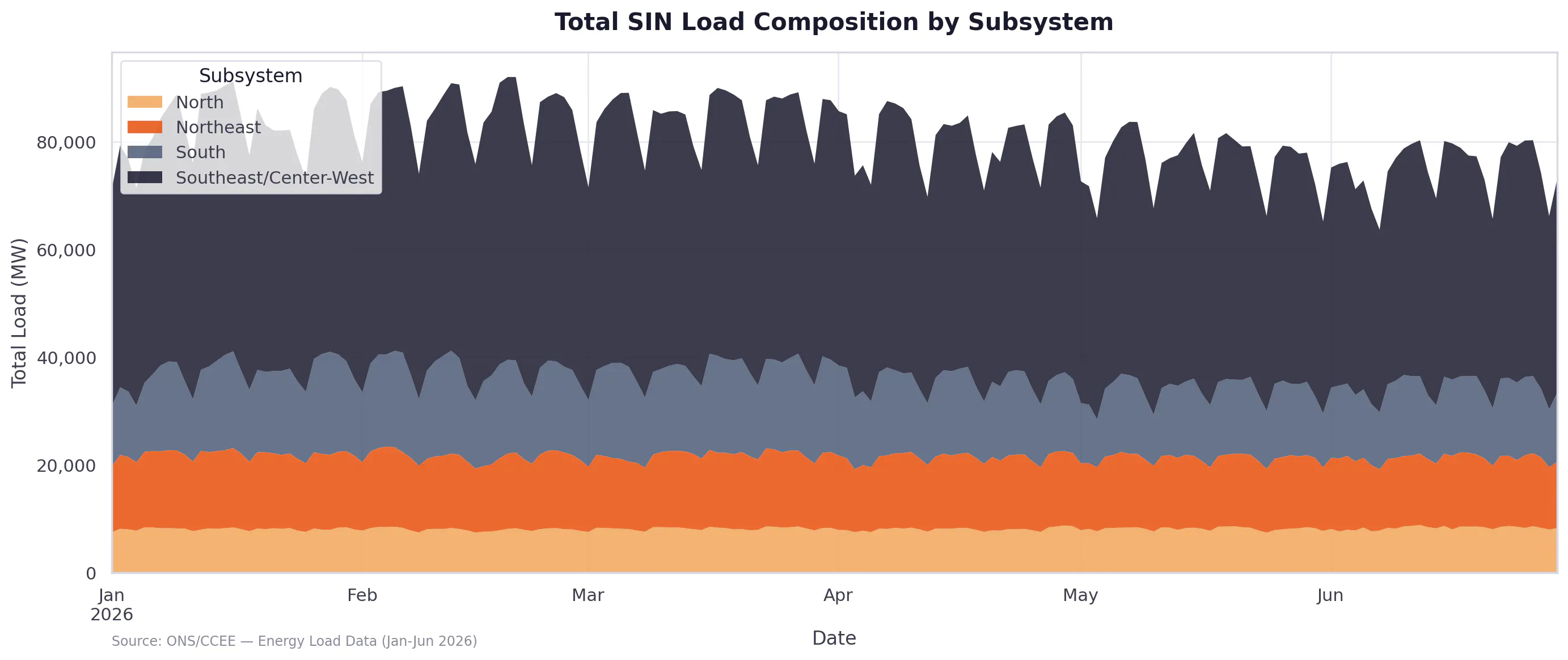
Load data from the National System Operator (ONS) for the first half of 2026 confirms the structural dominance of the Southeast/Center-West subsystem within Brazil's National Interconnected System (SIN), which accounted for approximately 55% of total average energy demand over the period, more than three times the combined share of the Northeast (17%) and Sul (18%) subsystems, with the North contributing the remaining 10%.
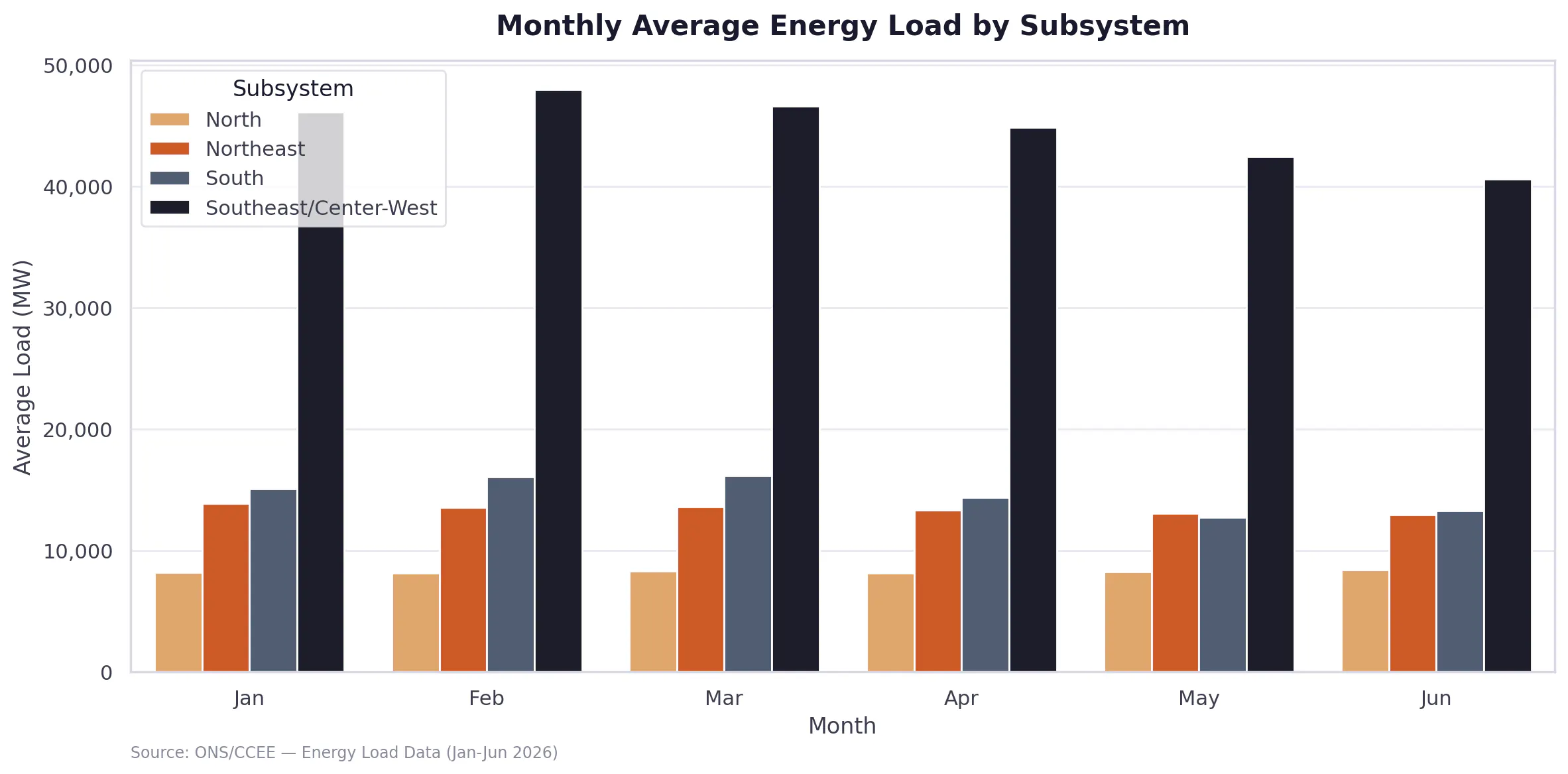
This concentration reflects the subsystem's industrial and demographic weight, but it also reinforces its role as the primary swing factor in national load behavior: average demand in Southeast/Center-West declined from roughly 46.1 GW average in January to 40.6 GW in June, a contraction of nearly 12% that alone drove most of the observed reduction in total SIN load across the semester.
Seasonal effects were evident across all subsystems, consistent with the transition from Brazilian summer to the milder autumn-winter period.
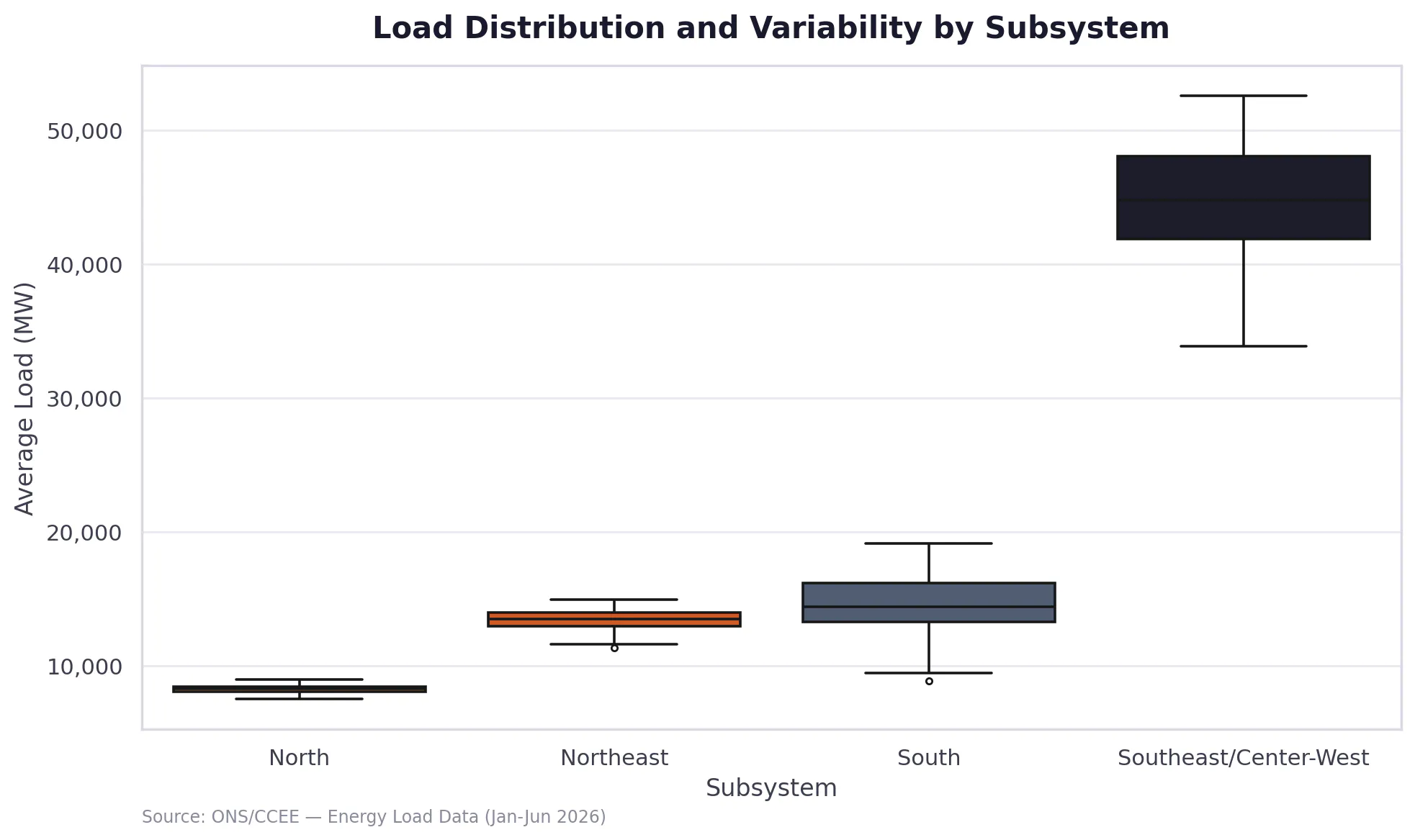
> The South subsystem exhibited the highest volatility in the dataset (standard deviation of approximately 2,135 MW versus 305–915 MW in the other regions), with average demand falling from 15.1 GW in January to 13.3 GW in June, a pattern typical of a subsystem more exposed to temperature-sensitive cooling load and to the variability of hydrological conditions in the South.
> The Northeast subsystem showed a comparatively moderate and steady decline, from 13.9 GW to 12.9 GW, while the North subsystem stood out as the only region with a slight upward trend, rising from 8.2 GW to 8.4 GW, likely reflecting more stable industrial and residential consumption patterns less affected by seasonal temperature swings.
From a system planning and market perspective, these findings carry direct implications for curtailment risk, transmission constraint management, and commercialization strategy in the Northeast
> The combination of a declining Southeast/Center-West subsystem load base and comparatively stable Northeast subsystem demand narrows the historical gap between subsystems, a dynamic that merits close monitoring given its potential influence on inter-regional transmission flows, marginal cost formation (PLD), and the relative attractiveness of new renewable capacity additions across regions.
As the second half of 2026 unfolds, tracking how these load trajectories interact with hydrological reservoir levels and the pace of intermittent generation additions will be essential for accurately assessing curtailment exposure and structuring bankable PPAs in the region.
#RenewableEnergy #EnergyTransition #PowerGrid #Brazil #EnergyMarkets #GridReliability #EnergySector #Sustainability #CleanEnergy #EnergyStorage #SolarEnergy #EnergyPolicy #PowerSystems #Curtailment #EnergyConsulting