


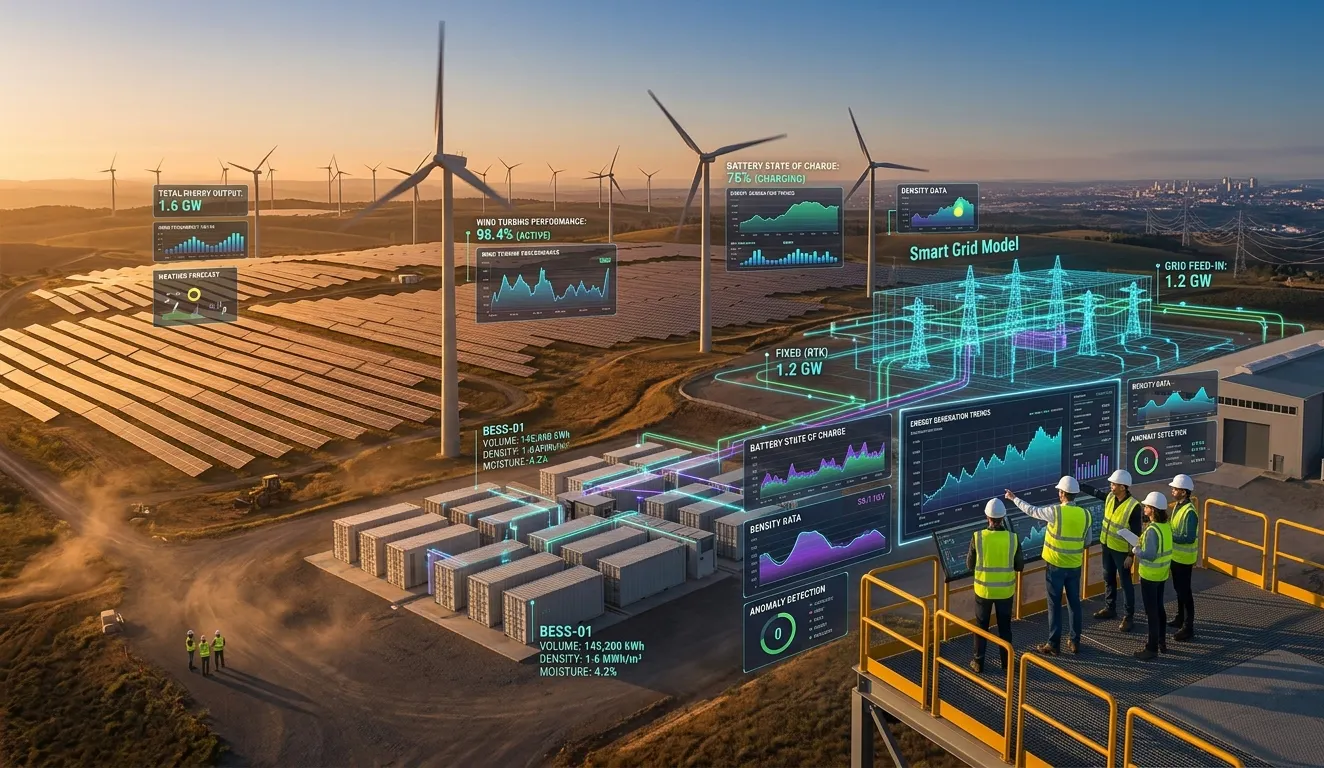
Why Real-Time Insights Matter in Renewable Energy Projects
Renewable energy projects such as solar farms, wind parks, hydroelectric systems, and energy storage facilities are expanding as part of the global shift toward sustainable power generation. The efficiency of these projects depends not only on installed capacity but also on the ability to monitor, analyze, and respond to operational data in real time.
Real-time insights play a key role in renewable energy management by enabling continuous monitoring, improving operational awareness, and supporting timely decision-making.
The Complexity of Renewable Energy Operations
Renewable energy systems operate under variable and often unpredictable conditions. Unlike conventional power plants, sources such as solar and wind depend heavily on environmental factors. Common challenges include:
Fluctuating energy generation due to weather and seasonal changes
Distributed infrastructure across multiple locations
Integration with electrical grids and storage systems
Regulatory and reporting requirements
When real-time data is not available, operators must rely on delayed information, which can lead to inefficiencies, reduced performance, and missed operational issues.
What Are Real-Time Insights in Renewable Energy?
Real-time insights refer to the continuous collection and analysis of operational data as it is generated. In renewable energy systems, this may include:
Energy output from solar panels or wind turbines
Turbine rotation speed, blade position, and alignment
Weather conditions such as sunlight intensity, wind speed, and temperature
Equipment status, including inverters and battery systems
Grid performance and energy storage levels
Access to this data in real time allows operators to observe system behavior and respond to changes as they occur.
Technologies Enabling Real-Time Insights
Several technologies support real-time monitoring in renewable energy projects:
1. SCADA Systems
Supervisory Control and Data Acquisition (SCADA) systems are used to remotely monitor and control equipment. They provide dashboards that display system performance and alert operators to irregular conditions.
2. IoT Sensors
Sensors installed on equipment collect detailed data, including temperature, vibration, and energy output. This information is transmitted to centralized systems for analysis.
3. Artificial Intelligence and Machine Learning
AI systems analyze large datasets to identify patterns, detect anomalies, and predict potential issues based on historical and real-time data.
4. Cloud-Based Platforms
Cloud systems store and process data from multiple locations, allowing remote access, visualization, and analysis.
5. Drones and Aerial Monitoring
Drones are used to inspect infrastructure such as solar panels and wind turbines. They provide visual data that complements sensor-based monitoring.
Importance of Real-Time Insights
Maximizing Energy Output
Real-time monitoring helps track energy production and adjust system performance in response to environmental conditions.
Preventing Equipment Failure
Continuous monitoring allows early detection of abnormal conditions, reducing the risk of equipment breakdown.
Improving Operational Efficiency
Operators can identify underperforming components and address inefficiencies more quickly.
Enhancing Safety
Monitoring systems can detect unsafe conditions, such as extreme weather or equipment faults, enabling timely responses.
Supporting Decision-Making
Real-time data provides accurate information for operational planning, maintenance scheduling, and system optimization.
Ensuring Regulatory Compliance
Continuous monitoring supports accurate reporting and helps meet regulatory requirements.
Applications Across Renewable Energy Sectors
Solar Energy
Monitoring panel performance, detecting faults, and analyzing environmental conditions.
Wind Energy
Tracking turbine performance, wind conditions, and mechanical stress.
Energy Storage
Monitoring battery performance, charge cycles, and system health.
Hydropower
Observing water flow, turbine efficiency, and system stability.
Challenges in Real-Time Monitoring
High initial setup costs for monitoring systems
Large volumes of data require efficient management
Need for trained personnel to interpret data
Connectivity limitations in remote locations
Future Developments
The use of real-time insights in renewable energy is evolving with advancements such as:
Predictive maintenance using AI
Improved energy forecasting
Integration of aerial and sensor-based monitoring
Enhanced data transparency systems
Conclusion
Real-time insights are an important component of modern renewable energy operations. They enable continuous monitoring, support efficient system performance, and improve the ability to respond to changing conditions. As renewable energy systems continue to grow in scale and complexity, the role of real-time data in managing them is expected to grow. If you wanna know more about Renewable energy, then you must read this Blog too.