


Small Modular Reactors are often talked about through the lens of civil design, licensing, and financing. The quieter story is digital: AI and machine learning are turning analyzer systems from passive instrumentation into an active intelligence layer for compact nuclear fleets.
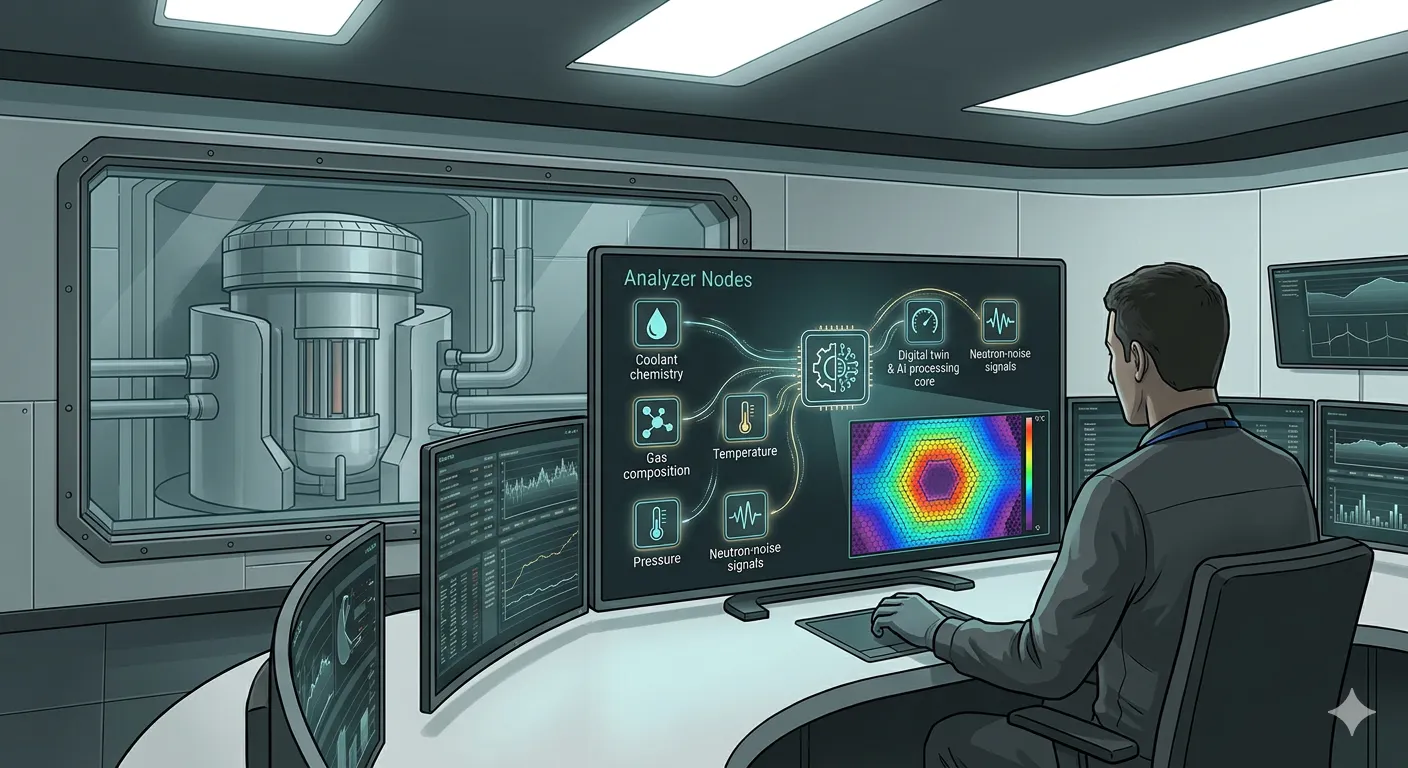
In SMRs, physical compactness and operational standardization create the perfect setting for AI‑ready Process Analyzer Systems Integration (ASI). The win is not flashy autonomy, it is earlier detection, cleaner diagnostics, and better use of every safety‑relevant signal.
1. From measurement to machine judgment
For decades, analyzer integration in heavy industry mostly meant routing signals cleanly into control systems, maintaining calibration discipline, and keeping the instrumentation layer dependable. In the SMR era, that definition feels too narrow.
SMRs are being designed with modularity, repeatability, and digital operations in mind. That combination changes the economics of AI. A model trained to recognize healthy signal behavior, process deviations, or maintenance precursors does not have to justify itself on a single asset alone. It can improve across an entire fleet.
In this view, analyzer integration is no longer just about connectivity. It is about creating a trusted data fabric that AI can learn from, validate, and return value to.
2. Diagnostics move from reactive to anticipatory
SMRs depend on dense instrumentation and clean operator situational awareness. That makes analyzer quality a first‑order issue. If coolant chemistry, gas composition, thermal behavior, or neutron‑noise signatures begin to drift, the plant does not merely lose precision, it loses confidence in the story its own sensors are telling.
AI/ML changes this by wrapping every signal in context. Instead of asking whether a value is high or low, the model asks whether the pattern looks credible for this operating state, this load condition, this startup phase, and this module’s history. This means:
Anomaly models can flag unusual behavior before a conventional alarm threshold is crossed.
Drift‑detection models can distinguish instrument aging from true process change.
Pattern‑recognition models can reduce false positives during transients, a critical step in lowering operator fatigue.
The analyzer layer stops being a passive source of raw values and becomes an active participant in plant diagnostics.
In an SMR fleet, the winning digital architecture may be the one that learns fastest from subtle instrumentation behavior without ever compromising safety discipline.
3. Soft‑sensors will matter more than people expect
Compact nuclear designs naturally limit where direct measurement is practical. Some states are difficult, expensive, or undesirable to observe with hardware alone. That is where AI‑enabled soft‑sensors become strategically important.
A soft‑sensor is a model that infers what cannot be easily measured from what can be measured continuously. In SMRs, that may include:
Local thermal conditions
Developing flow instability
Subtle equipment degradation
Emerging deviations in power distribution
The point is not to replace the physical instrument. The point is to extend its usefulness and increase the fidelity of the operator’s mental picture of the plant.
When these models are integrated into analyzer systems, the control room gains a second layer of vision: operators see both direct measurements and inferred states, which is often the difference between noticing a symptom and understanding a trend.
4. Why the architecture has to be layered
Nuclear deployment does not reward reckless automation. Any AI‑ready analyzer stack in an SMR context has to separate advisory intelligence from safety‑grade actuation. That creates a clean architectural pattern:
At the edge, lightweight models monitor drift, signal health, and local anomalies in near real time.
At the platform level, stronger models train on aggregated fleet data, digital‑twin output, and long‑run event histories.
In the control room, model outputs appear as advisory tags, health scores, and operator guidance rather than opaque automated actions.
This layered approach is powerful because it respects nuclear governance while still extracting the full intelligence value of data.
5. Fleet learning may become the true SMR multiplier
The single‑reactor story is interesting. The fleet story is transformative. AI gets disproportionately better when similar modules generate comparable data under controlled design assumptions.
One module detects a subtle precursor → the fleet gets smarter: Federated or centrally validated learning allows patterns from one site to improve diagnostics elsewhere, without treating each reactor as a standalone experiment.
Maintenance shifts from periodic routines to confidence‑based interventions: When analyzer health, rotating‑equipment data, and chemistry patterns are modeled together, plants can intervene earlier and more precisely.
Standardized modules make model governance easier: A repeatable SMR design reduces variation. That lowers the burden of retraining, improves interpretability, and makes validation more scalable.
The digital twin finally has enough operating context to matter daily: Once analyzer streams are integrated into model pipelines, digital twins stop being occasional engineering tools and become part of everyday operational reasoning.
6. What this changes for the nuclear conversation
SMR discussions often focus on site footprint, construction repeatability, financing models, or regulatory pathways. Those issues matter. But the digital operating model deserves equal attention because it can quietly determine whether these reactors are merely smaller or genuinely smarter.
AI/ML‑enabled analyzer integration gives SMRs a realistic path to that smarter future. It:
Improves the credibility of instrumentation
Extends observability through soft‑sensors
Supports predictive maintenance
Creates the possibility of fleet‑wide learning with high operational discipline
The strongest SMR programs may not be the ones with the most ambitious automation rhetoric. They may be the ones that design a rigorous analyzer‑data architecture from day one, then let validated machine intelligence grow carefully on top of it.
For SMRs, the next competitive edge may be invisible: not steel, not concrete, not even the reactor vessel itself. It may be the quiet intelligence wrapped around analyzer systems—models that know when a signal is lying, when a component is tiring, and when one reactor can teach the rest of the fleet how to operate better.
Declaration: The perspectives in this post are research‑based and represent my own views, built from publicly available technical and industry knowledge. No brands, organizations, or individuals are endorsed or referenced, and the content does not reflect the official position of any employer or client.