


Not because the technology is failing — it is not. The cost trajectory is real, the deployments are real, and the contribution to grid operations is genuinely consequential. But the narrative running ahead of the engineering has a specific and dangerous characteristic: it is true for four hours and largely silent about everything beyond.
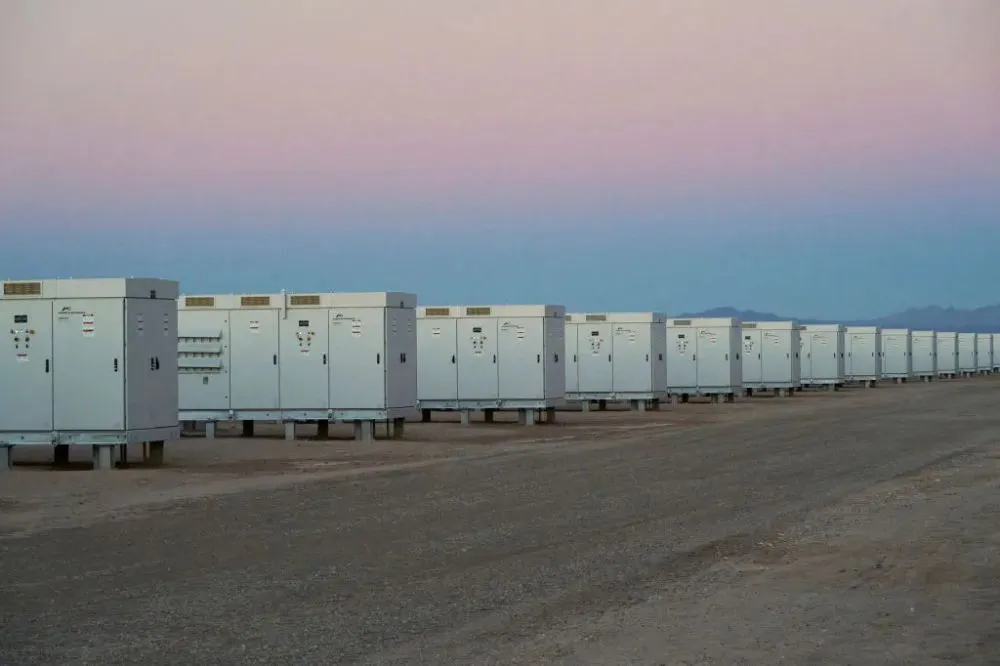
In Episode 05 of the Renewable Energy Mall & Engineering Review (REM), I examine the structural limitation that the storage industry's marketing materials handle with remarkable consistency — by not handling it at all.
The four-hour wall is not a metaphor. It is a precise description of where the commercially mature, cost-competitive, widely deployed battery storage market currently ends. Over 90% of global grid-scale storage operates at durations of four hours or less. For short-duration balancing — frequency response, peak shifting, duck curve mitigation — this is exactly what the grid needs and lithium-ion delivers it brilliantly. The cost reduction from $1,200/kWh in 2010 to approximately $139/kWh in 2024 is one of the most remarkable economic transformations in the history of industrial technology.
But grids do not fail on average days. They fail on the worst days — and the worst days for a high-renewables grid are not four hours long. They are the Dunkelflaute events that grid planners across Northern Europe model carefully and discuss quietly: multi-day periods of low solar irradiance and low wind coinciding with peak winter demand. Germany experiences these conditions regularly. So does the UK. So does most of continental Europe. The residual load during these events approaches total system demand, and the stored energy required to cover them at scale is not a planning challenge that lithium-ion economics can resolve. The numbers are not close.
Beyond duration, the article examines a second challenge that receives even less attention in public discourse: degradation. Lithium-ion cells lose 20–30% of usable capacity over ten years of daily cycling. This is not a tail risk — it is the central case for the chemistry. Project financial models that assume flat performance over a twenty-year asset life are not conservative. They are systematically wrong. The storage projects that will disappoint investors in the 2030s are being modelled today with assumptions that the engineering literature does not support.
The article also assesses the long-duration storage landscape honestly — pumped hydro's geographic constraints, flow batteries' early commercial status, green hydrogen's efficiency penalty, compressed air and gravity storage's unproven economics at scale — and arrives at the conclusion that no single technology has yet demonstrated the combination of cost, scalability, and maturity required to close the seasonal storage gap.
For African markets, the analysis shifts register entirely. The four-hour wall is a deep grid decarbonisation problem — relevant for systems attempting 80–100% renewable penetration in mature, interconnected electricity markets. For off-grid and mini-grid deployments serving communities currently without electricity access, the storage challenge is a twelve-hour problem that current lithium-ion technology handles competently. The real barriers there are supply chain reliability, local technical capacity, and financing access — not chemistry. Solving those barriers requires different interventions than the ones dominating the storage conversation in European and North American policy circles.
The energy transition needs battery storage to do what it does brilliantly. It also needs the intellectual honesty to acknowledge what it cannot do — and to build the complementary infrastructure that addresses the gaps. Celebrating one without accounting for the other is how we construct a grid that performs on the good days and fails on the ones that matter most.
This is Episode 05 of REM. It is designed to be read by the engineers and investors making storage decisions today — before those decisions become tomorrow's underperforming assets.
📖 Read the full analysis here: 👉 The Four-Hour Wall: Why Battery Storage Still Cannot Save the Grid Alone
REM — Renewable Energy Mall & Engineering Review | Episode 05 Authored by Donfack Fortune — Mechanical Engineer & Energy Systems Analyst 🏢 Follow REM: https://www.linkedin.com/company/112016019
📩 Follow the REM series on Substack — rigorous energy engineering analysis, delivered to your inbox: 👉 https://substack.com/@donfackfortune