


Africa’s commercial energy storage market is entering a rapid growth phase driven by grid instability, accelerating renewable deployment, and rising industrial electricity demand. Battery Energy Storage Systems (BESS) are increasingly being deployed as a core infrastructure component rather than a supplementary technology. This article examines the key market drivers, technology trends, and sector-specific opportunities shaping the evolution of energy storage across African markets.
1. Introduction: From Energy Access to Energy Reliability
Historically, Africa’s power sector discourse has focused on electrification rates and generation capacity. However, the current transition is increasingly defined by a different challenge: power reliability and quality.
In major commercial and industrial markets such as Nigeria, South Africa, and Kenya, businesses are facing:
Frequent grid outages and load shedding
Voltage instability affecting sensitive industrial loads
High reliance on diesel backup generation
Increasing peak demand charges
These conditions are creating strong demand for distributed energy storage solutions integrated with both grid and renewable assets.
2. Market Drivers Behind Commercial Energy Storage Adoption
2.1 Grid Instability and Capacity Constraints
Many African power systems are constrained by aging transmission infrastructure and limited generation reserve margins. As a result, commercial users often experience unreliable supply even in grid-connected areas.
Energy storage is being deployed to provide:
Frequency and voltage support
Peak load management
Backup power during outages
Grid services in some utility-led pilots
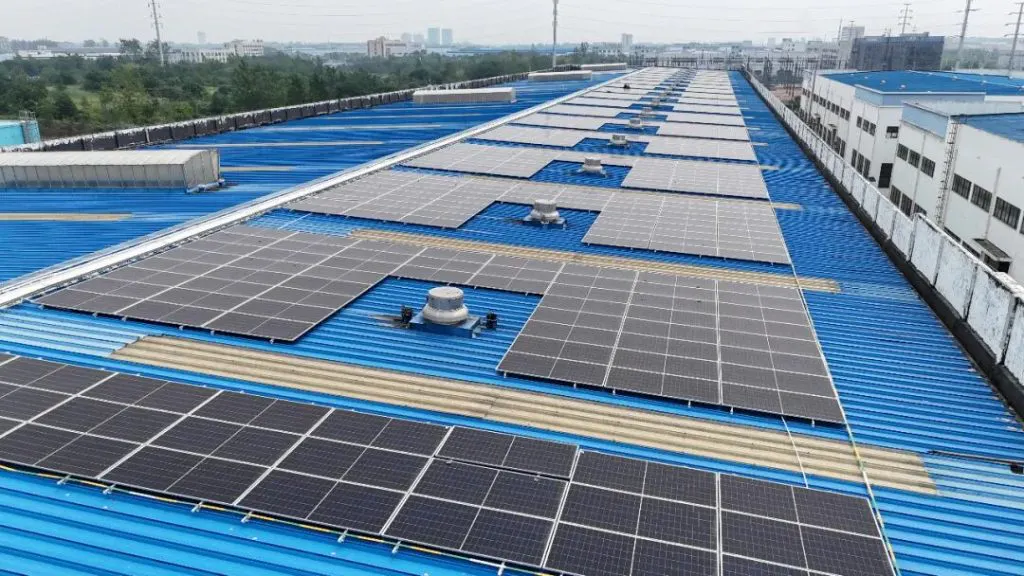
2.2 Growth of Distributed Solar PV
Africa has one of the highest solar irradiation levels globally, driving rapid deployment of distributed solar PV systems.
However, solar variability introduces new grid integration challenges, making storage essential for:
Energy shifting from daytime generation to evening demand
Smoothing intermittency
Increasing self-consumption rates in C&I systems
2.3 Diesel Displacement Economics
Diesel generators have traditionally served as backup power across commercial and industrial sectors. However, rising fuel costs, logistics constraints, and environmental considerations are accelerating the transition toward hybrid systems.
A typical replacement architecture includes:
Solar PV + Battery Energy Storage Systems (BESS) + Energy Management Systems (EMS)
3. Technology Evolution in the African BESS Market
3.1 Lithium-ion as the Dominant Chemistry
Lithium-ion technologies have become the standard for new commercial deployments due to:
Higher round-trip efficiency
Longer lifecycle performance
Declining cost per kWh
Improved thermal and safety management systems
Key global suppliers include CATL and BYD Company Limited, both of which are actively expanding global ESS deployment capacity.
3.2 Containerized and Modular System Design
Containerized BESS solutions are particularly well-suited to African deployment conditions due to:
Reduced on-site installation complexity
Faster commissioning timelines
Easier transport to remote or off-grid locations
Scalable modular expansion (100 kWh to multi-MWh systems)
This architecture is increasingly preferred for industrial, mining, and telecom applications.
3.3 Integration with Energy Management Systems (EMS)
Modern BESS deployments are increasingly software-defined. EMS platforms enable:
Demand forecasting and load optimization
Peak shaving and arbitrage strategies
State-of-charge optimization
Predictive maintenance and lifecycle extension
This shift is increasing the overall value proposition of storage beyond simple backup functionality.
4. Key Application Segments
4.1 Industrial and Manufacturing
Industrial facilities require high power reliability to avoid production downtime. Energy storage is increasingly deployed to mitigate grid instability impacts.
4.2 Mining Sector
Mining operations represent one of the largest and fastest-growing segments for BESS adoption due to remote site locations and high energy intensity.
4.3 Telecommunications Infrastructure
Off-grid and weak-grid telecom towers are transitioning from diesel-based backup systems to solar-plus-storage hybrid configurations.
4.4 Commercial Buildings and Data Infrastructure
Commercial real estate, retail centers, and data centers are adopting storage for peak shaving, load shifting, and backup resilience.
4.5 Rural Electrification and Microgrids
Decentralized microgrid systems combining solar PV and battery storage are expanding electricity access in off-grid communities.
5. Financing Models and Market Structure Evolution
A key factor enabling market expansion is the evolution of financing structures:
Energy-as-a-Service (EaaS) models
Power Purchase Agreements (PPAs)
Leasing-based storage deployment
Public-private partnership (PPP) microgrid programs
These models reduce upfront capital barriers and are accelerating adoption in both commercial and public sector applications.
6. Challenges and Constraints
Despite strong growth potential, several structural challenges remain:
High initial capital expenditure requirements
Currency fluctuation risk in certain markets
Supply chain dependency on imported components
Regulatory fragmentation across jurisdictions
Limited local technical capacity for O&M
However, declining technology costs and increased international investment are gradually mitigating these constraints.
7. Outlook: Toward a Distributed Energy System
The long-term trajectory of Africa’s power sector suggests a shift toward a distributed, storage-centric energy architecture, characterized by:
Increased penetration of decentralized solar generation
Widespread deployment of battery storage systems
Integration of smart grid and EMS technologies
Reduced reliance on diesel generation for backup power
In this context, energy storage is transitioning from an optional asset class to a foundational grid component.
Conclusion
Africa’s commercial energy storage market is evolving rapidly from early-stage adoption to systemic integration. Driven by reliability concerns, renewable expansion, and cost dynamics, BESS is becoming central to the continent’s energy infrastructure transformation.
For utilities, developers, and industrial energy users, the market represents both a technical shift and a strategic opportunity in shaping Africa’s future energy system.