


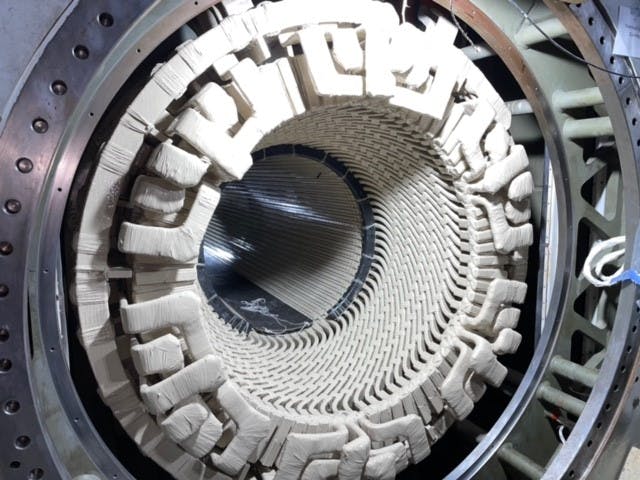
Major Inspection of a 330H gas-turbine generator indicated that a stator rewind was needed. The unit failed electrical tests and had suffered with indications of heavy wedge slot and bar tie greasing. The owner/operator asked MD&A to complete the rewind and get the unit back online for long-term, trouble-free operation.
Unit disassembly began with MD&A’s Outage Services Division crew mobilizing to site and setting up the outage plan.
During the disassembly, all critical as-found measurements were taken, recorded, and transmitted to both MD&A Engineering and the owner/operator.
After removal of bearings, oil/hydrogen deflectors and seals, eyebrows were installed, end shields lowered and support brackets removed. Hydrogen coolers were removed and MD&A’s experts withdrew the field from the stator core.
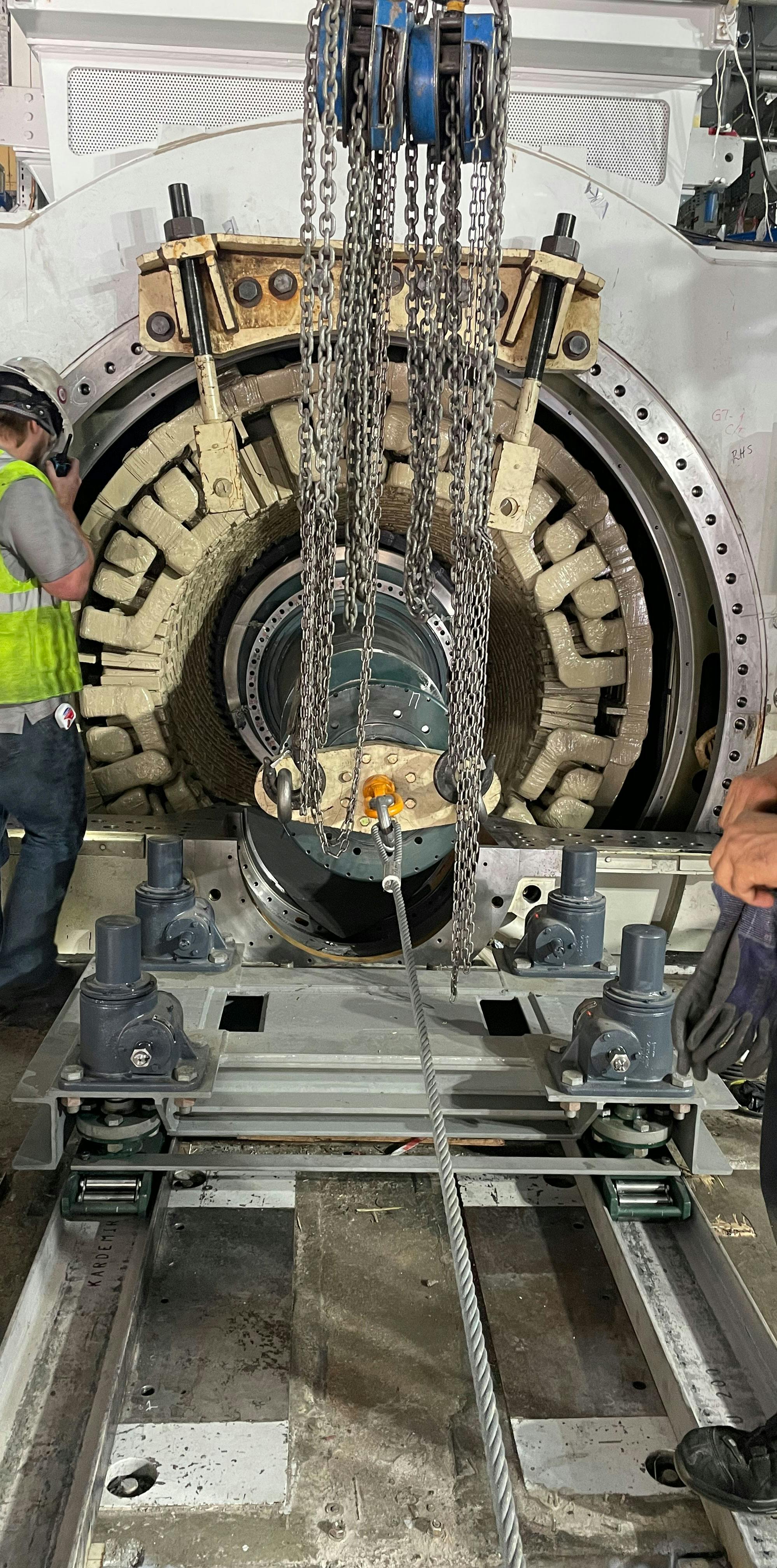
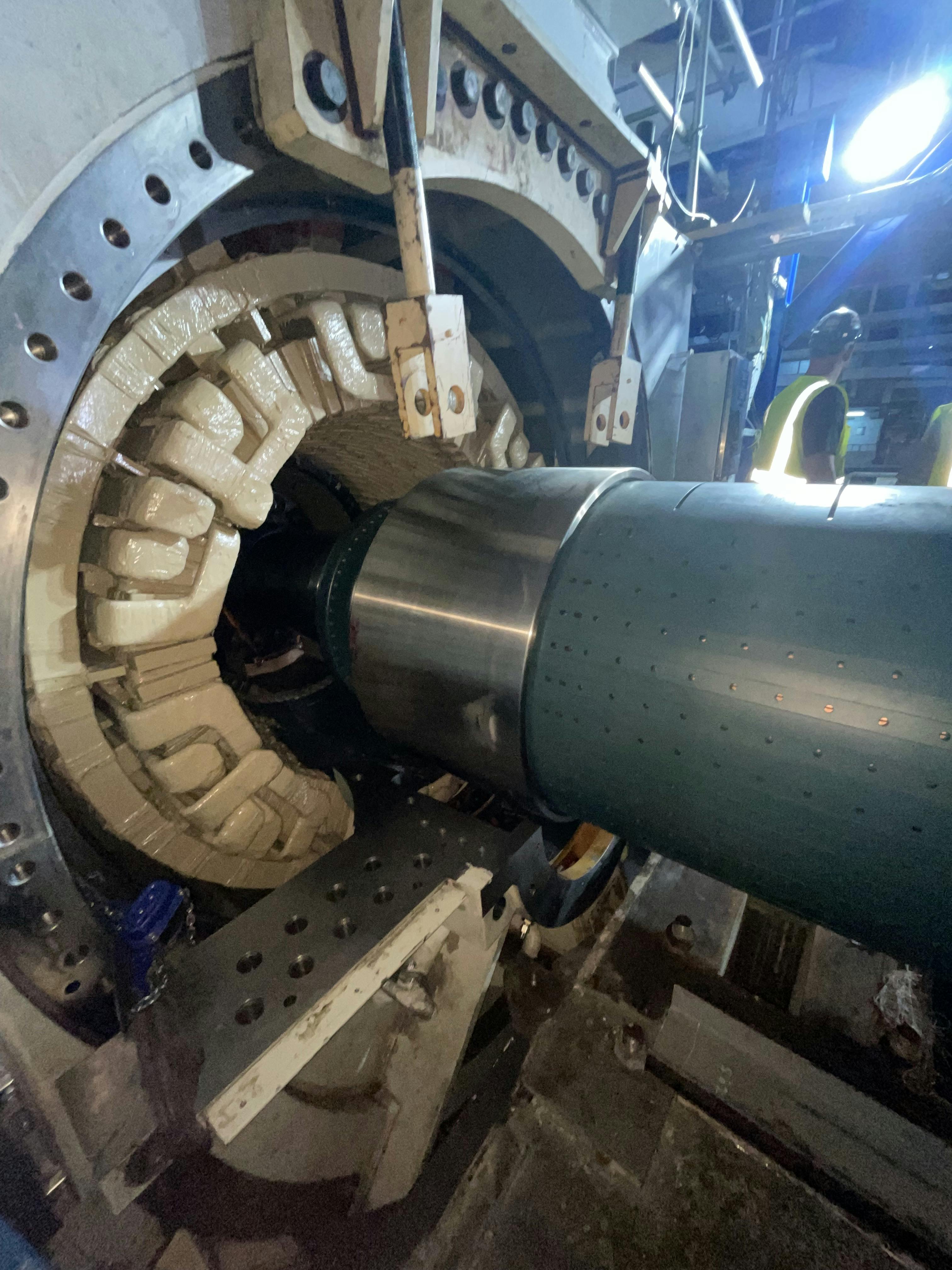
A complete list of replacement parts, bolts and gaskets needed for reassembly was prepared. Bearings were inspected and FME protection was installed, as 330H stator bar shipments arrived from MD&A stock.
Stator Rewind and Repairs
The phase connections were stripped and unbrazed from the connection rings which allowed for ease of rewind and much needed replacement, due to known cracking issues in similar models. Series connections and top bar ties were cut for bar removal. A base-line electromagnetic core imperfection detection (ELCID) test was performed before wedge removal to determine integrity of the as-found core laminations.
The existing tapered wedge system was then removed by traditional methods and MD&A’s procedure. Although the wedge system had recently been given a clean bill of health by another provider during a previous in-situ wedge tap, it was obvious that the entire wedge system was loose, allowing premature aging of the bar ground wall insulation and likely a contributor to the failed insulation.
Series loop connections were removed. Original circuit ring connections were unbrazed and removed showing poor condition, to be replaced with new parts manufactured by MD&A. Top bars were then removed followed by inner radial rings for access to the bottom bars.
After bottom bar removal, core cleaning began followed by a post-disassembly ELCID. During cleaning, MD&A also replaced high-voltage bushings (HVB) with new O-ring seals.
Stator bar installation then began.
All tie materials were saturated with air-dry epoxies for more-solid bonding, limiting any loosening post installation. All bar ties and phase blocking ties were made with epoxy saturated “8-strand” glass roving.
Previous side ripple spring (SRS) abrasion was a concern. MD&A generator engineering improved the SRS design to prevent abrasion issues that have led to premature failure in several similar units. This process was followed on each end of the bar for the top and bottom bars.
Following completion of bottom bar installation and electrical testing, inner radial rings were installed, and resistance temperature detectors (RTDs) were placed in slots. Top bar and side ripple spring installation was completed, followed by full electrical testing.
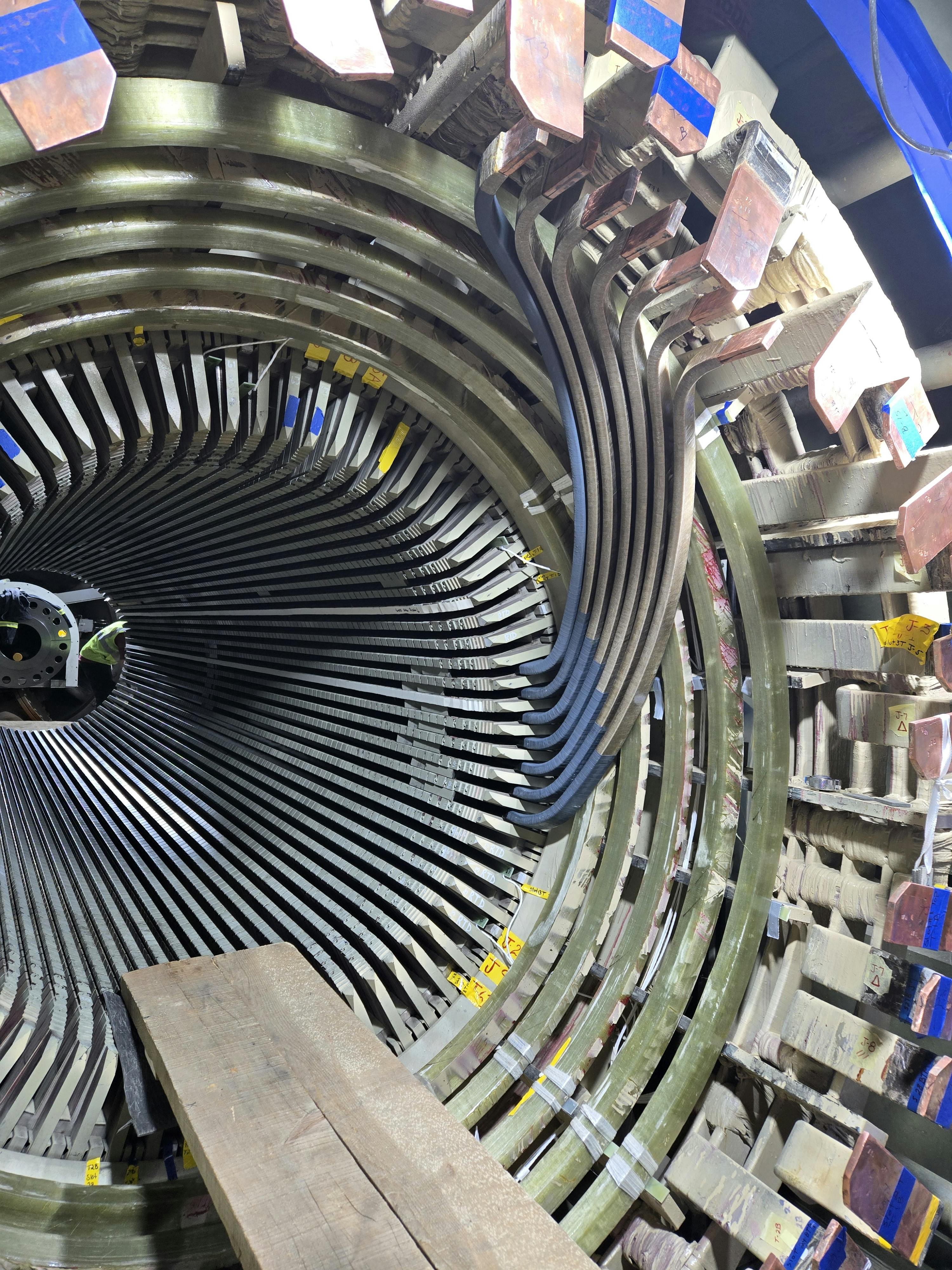
New slot wedges were installed. Significant attention was given to the wedge system to ensure proper and tight installation. Compression of the top ripple springs (TRS) is a vital part of ensuring that the wedge system is correctly installed. TRS are installed to provide constant force overtime as the slot build materials relax and potentially loosen. The system is designed to make up for this relaxation with their inherent spring forces.
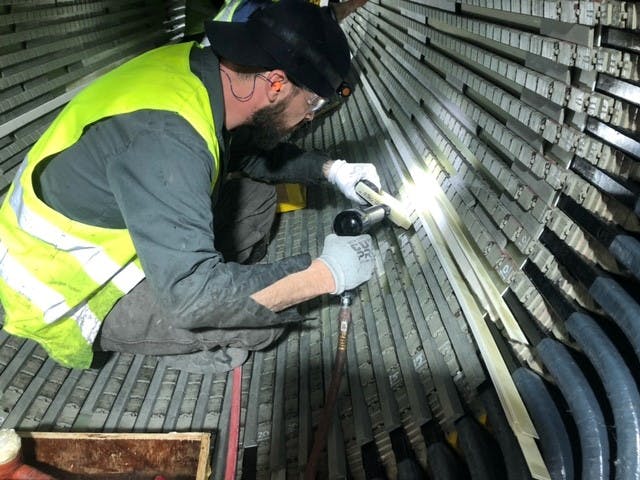
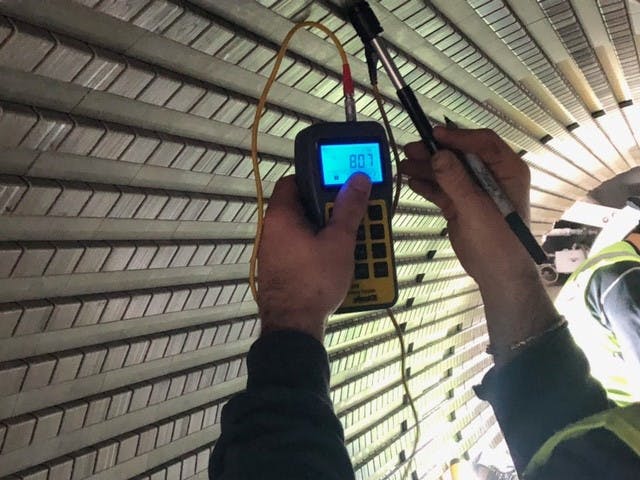
Each wedge was tested with an electronic hardness tester to ensure adequate TRS compression and to use as a baseline for future inspections.
Following wedge installation, a third and final ELCID test was performed to ensure no core laminations were damaged by the wedge installation process, and the original flux probe was installed. Another HiPot was performed to ensure that the bar ground wall insulation had not been damaged by wedging activities.
Series and phase brazing began. Brazing was performed with specialized double-headed torches for heating the plate/bar assembly. The phase and jumper connections were completed with the new plates manufactured by MD&A. Phase connection insulating series cap installation and all blocking completed the rewind work.
After completing all brazing work, copper winding resistance was measured to ensure that each of the three phases produced nearly identical resistance, indicating quality braze connections.
Final electrical testing was performed to ensure all components were ready for service.
The MD&A team is confident in the quality of the rewind completed on this generator. The bar ties installed are of the strongest and most durable type available in the industry. The wedge system is tight and the top ripple springs are compressed to 90%.
Reassembly
The generator coupling flange had an indication on the rim, so our Engineering team created a 3D model and performed a stress analysis to confirm it was in a low stress area. It was recommended to blend out the indication and the 3D model confirmed the final geometry maintained full capability of the coupling flange. The blended area was polished and a final NDE (dye penetrant inspection) of blended area confirmed the indication was successfully removed.
Ongoing inspections included fan blades, bearings, load coupling bolts, hydrogen casings, oil deflectors and all coolers. Bearings were inspected and cleaned.
Hydrogen seals were measured and inspected. Bluing of the seals to the casing determined that lapping was required for acceptable contact.
With hydrogen coolers and shields reinstalled, the field was prepared and inserted into the stator. Inner oil deflector clearances were reset to limit the ingestion of seal oil into the unit.
All axial fan blades were inspected, verified, and returned to service. Six collector fan blades, showing trailing ends tip blends, were replaced.
The load coupling was aligned to OEM specifications.
Return to Service
The global team of MD&A experts returned this 330H generator to full service and renewed owner/operator confidence in its ongoing contribution to dependable electricity demand in the home country.
MD&A stocks stator bar sets for 330H, 324, 7FH2 and several other commonly found generator stator models. MD&A is ready to mobilize anywhere in the world at a moment’s notice to support your emergent or planned outage needs
Contact the premier non-OEM service provider to the global turbine-generator market. Call us at +1 (518) 399-3616 today.
Also be sure to sign up for our MD&A Insight e-newsletter delivered quarterly. Get our turbine-generator expert’s case studies and tips! Fill in sign up form and SUBSCRIBE!