

When it comes to extra high voltage transmission design, it’s time to throw out the playbook. Traditional transmission line project timelines have long followed a linear path: start with conceptual planning, move through design phases and end with a completed, in-service system. This approach works well for standard voltage classes where established practices and design standards guide the process.
But when it comes to higher voltage classes—500 kV and especially 765 kV—that linear model starts to break down. Because all design elements are interconnected, it’s best to use a cyclical design approach where study results inform line designs and line design outcomes feed back into the studies.
Each extra high-voltage project, particularly 765 kV, presents unique challenges based on location, constraints and stakeholder needs. Understanding how these projects differ from lower voltage systems allows teams to focus their efforts where it matters most, setting the foundation for successful execution.
Extra high-voltage transmission projects involve complex design considerations across electrical studies, hardware, structures, loading, constructability and procurement. To begin, electrical studies (particularly relating to safety and physiological effects) drive key design elements like conductor sizing, bundle geometry and structure height.
Hardware assemblies must be thoughtfully designed, including elements such as yoke plates, insulator arrangements and jumper designs. Performance and availability are influenced by choices on corona ring placement and adherence to insulator standards.
Structure design is shaped by height restrictions (such as Federal Aviation Administration height limits). Horizontal configurations and steel lattice towers are favored for their strength and efficiency. These structures must be engineered to withstand high loads and extreme weather events (especially when using multi-bundle conductors).
Managing external components of the project is critical. Early contractor involvement is vital for constructability, foundation feasibility and stringing logistics. Procurement is a long-lead process, particularly for lattice steel, and requires a robust strategy to manage vendor risks and testing needs. Overall, success depends on balancing technical requirements with practical execution and early stakeholder collaboration.
Although 765 kV design is relatively new in the U.S., global experience offers valuable insights. The design process is inherently iterative. It requires multiple passes through key design activities, from initial baselining to final design. Rather than viewing the process as linear, it’s more accurate to think of it as a spiral. Each loop revisits and refines elements like criteria, conductor selection, insulation and structures.
This cyclical approach highlights the need for flexibility in managing the project schedule. The critical path may shift over time, requiring effective communication among project leads and the project manager to adapt the execution plan accordingly.
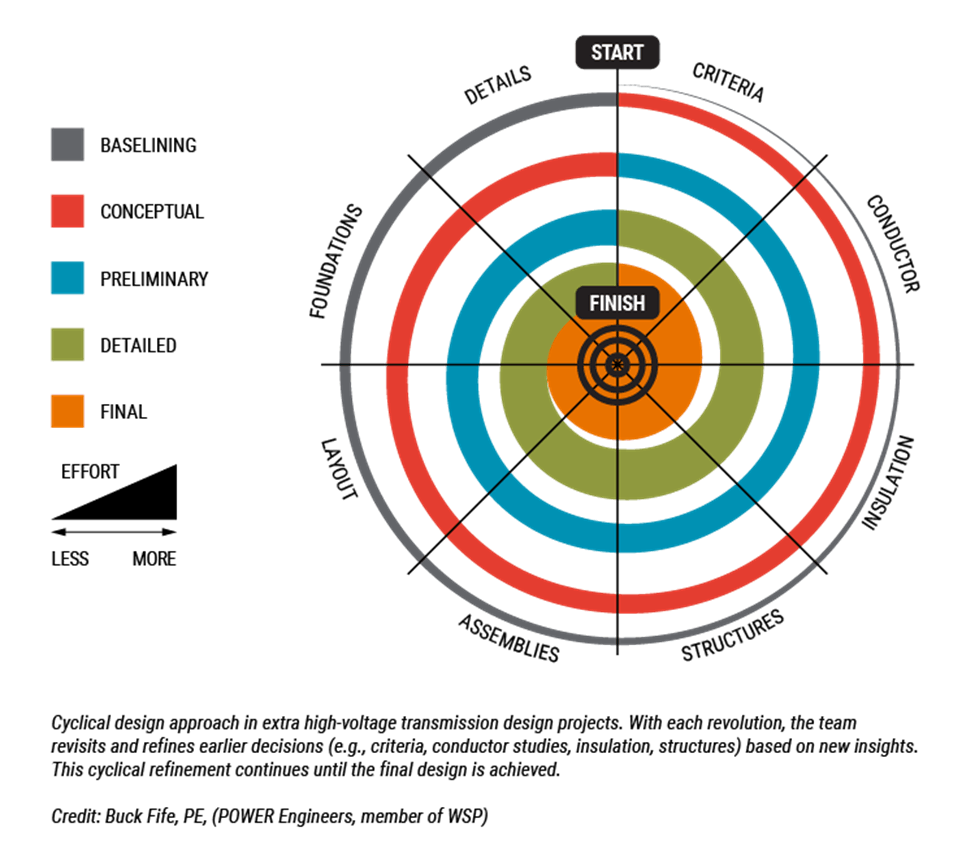
Transmission designers should expect to redo several calculations as they zero in on the final solution. This mindset shift is critical for clients and utilities accustomed to fast, linear design processes. They need to allow for longer timelines and more flexible budgets to accommodate the iterative nature of extra high-voltage design.
Benchmarking plays a crucial role in this new design paradigm. It serves as a “gut check” after the initial design iteration, helping teams determine whether they’re still on the right path. Growing experience with 765 kV lines provides a baseline of data from which to reference throughout iterations of the design process.
This benchmarking process helps identify whether the design is aligning with expected parameters—such as the number of conductors or structure dimensions—or if it’s veering into uncharted territory. That’s just another data point, because ultimately design considerations are unique to each project.
Another major shift in extra high-voltage projects is the size and scope of the project team. Lower-voltage projects can often be managed by just a few engineers with broad expertise. Higher-voltage work, however, demands a much larger, more specialized team.
This expanded team often includes lattice structure leads, foundation and geotechnical leads, real estate and permitting professionals and construction contractors—among many others—who each play a critical role in ensuring the project stays on track and meets evolving technical and regulatory requirements.
Designing extra high-voltage transmission lines requires a fundamental shift from traditional, linear project models to a more dynamic, iterative approach. By adopting a cyclical design process, leveraging benchmarking data and prioritizing early collaboration across disciplines, project teams can deliver reliable, efficient solutions that meet the demands of modern power infrastructure.
Success hinges on embracing the complexity of interconnected design elements, engaging a broader and more specialized team, and allowing for flexibility in both schedule and scope. This philosophy echoes the adage: an ounce of prevention is worth a pound of cure. Investing in thoughtful, expert-driven design early on can prevent costly rework, delays and inefficiencies during construction and operation.


