

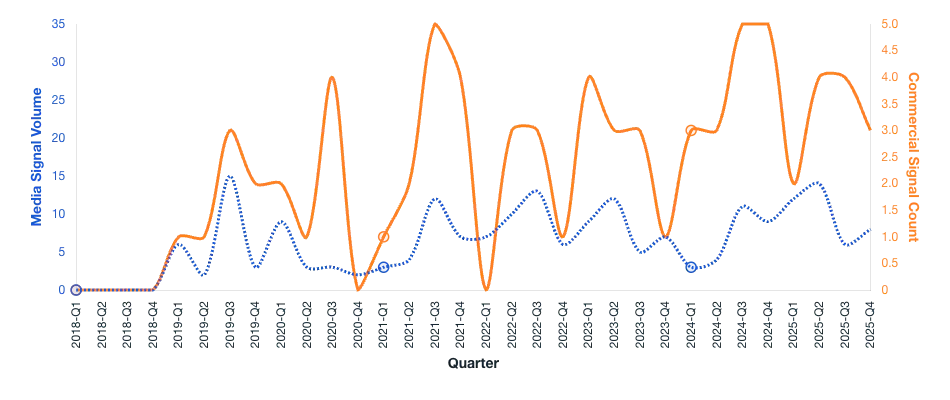
That is exactly the problem.
In January 2026, Bloom's media signal score hit 17. Its verified commercial event count that same month: 2.
One announcement. Seventeen units of coverage. Two units of actual deployment evidence.
That ratio does not make the AEP deal less real. The contract is confirmed. The 20-year offtake agreement is signed. The Wyoming facility is real.
What that ratio tells you is something different: the market is now priced on the narrative, not the execution.
And execution is where Bloom carries risk that the coverage is not reflecting.
Factory capacity is being doubled from 1GW to 2GW by end of 2026. Bloom's own filing flagged the risks: delays, cost overruns, geopolitical instability, labor shortages. SOFC stack degradation from thermal cycling is a known performance variable that gets one paragraph for every twenty written about the AEP headline. Gross margins last quarter sat at 29.2% on a company now valued at $37 billion against a $3.16 billion top analyst revenue target for 2026.
None of this means Bloom is the wrong position. It may be exactly the right one.
But the teams entering now with the headline as their evidence base are carrying more execution risk than their models reflect.
The signal was readable before January. The gap between media volume and commercial deployment evidence had been widening since Q2 2025. That pattern does not make itself visible in press coverage. It shows up in sub-vertical signal tracking.
That is the layer most teams skipped.

