


By Kennedy Maize
The Trump administration’s Department of the Interior faces serious challenges across its expansive jurisdiction, including federal lands in the west, offshore and onshore wind power, fire protection and firefighting, and the failing Colorado River system that serves some 40 million people with drinking and irrigation water and electric power in seven states from Wyoming to California.
The administration’s latest nominee to head Interior’s Bureau of Land Management — former New Mexico Republican Rep. Stevan Pearce — faced a confirmation hearing at the Senate Energy and Natural Resources on Wednesday (Feb. 25). His nomination is controversial because of his past support for broad sell off of public lands during his 14 years in Congress.

The nomination also drew attention because Trump’s first nomination head DOI’s chief land management agency, former western energy lobbyist Kathleen Sgamma, suddenly withdrew her nomination without explanation last October, after a four-year-old memo surfaced where she wrote she was “disgusted” by Trump’s behavior during the Jan. 6, 2021 Capital riot.
Controversy also derailed Trump’s first-term BLM, where acting director William Perry Pendley took office after the then-BLM head surprisingly left after less than a year. Pendley never faced confirmation and a federal judge ordered him removed as illegally appointed after 424 days in office. During his tenure, Pendley moved most of BLM’s operations from Washington to Grand Junction, Colo., although he remained in D.C.
The Pearce nomination prompted calls for the Senate to reject the nomination. The New York Times reported, “Pearce, 78, is facing strong opposition from a coalition of hunters, military veterans and environmental activists, as well as many Democrats, who have called him a threat to public lands.”
At the Senate hearing, responding to New Mexico Sen. Martin Heinrich, the committee’s ranking Democrat, Pearce cited Interior Secretary Doug Burgum’s disavowal of large scale public land sales during Burgum’s confirmation. Pearce said that Burgum has “been very straightforward” that he will not push large public land sales. Pearce noted that the Federal Land Policy and Management Act “does not allow BLM” to take such action. “I don’t envision any large scale sale of public lands,” he said.
The committee did not take any action on three nominations, including Pearce’s, expecting that will occur next week. Full Senate action will then be required. The other nominations, not controversial, are for Kyle Haustveit, currently DOE’s fossil energy head, to be the agency’s under secretary, and David LaCerte, serving a short-term appointment to the Federal Energy Regulatory Commission, for a full five-year FERC term.

When it comes to wind, the administration’s attempt through DOI to shut down five large East Coast wind projects, based on a pretext of a “national security” issue that was never defined, crashed and burned in federal courts. Interior’s stop work orders on the multi-billion-dollars in wind projects faced five separate legal challenges. In each case, a federal judge granted an injunction against the administration, citing administration behavior that was “arbitrary and capricious,” allowing work to continue on all of the projects. Dominion Energy said the period that its project off the Virginia coast was in limbo cost the company $228 million.
The Wall Street Journal reported on Thursday (Feb. 26) that Big Oil is pushing Trump to back off on his vendetta against wind. The newspaper wrote, “Oil lobbyists have made the case to Trump officials in recent weeks that his attacks on wind farms off the U.S. coast risk derailing congressional efforts to speed up permits for energy projects, according to people familiar with the matter.”
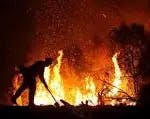
Because Interior is the major landlord of some 240 million acres of surface land and 700 million acres of subsurface minerals, it has serious firefighting responsibilities. In January, the department announced a plan to reorganize and consolidate its firefighting efforts. As with almost anything the agency does, the plan that creates a new U.S. Wildland Fire Service has generated controversy and opposition.
According to FEDweek, an online service geared toward federal and military employees and retirees, “A group of a dozen Democratic senators has pushed back on the Interior Department’s recent actions to consolidate its wildland firefighting functions of six of its subagencies into a new U.S. Wildland Fire Service.
“We are concerned that the DOI is advancing a rapid and consequential restructuring of wildfire management without adequate analysis, transparency, or planning to prevent disruption during what is expected to be a significant fire season or to safeguard long-term wildfire preparedness,” they said in a letter to the department.”
The letter highlighted the impact on BLM, noting that the land management agency has already lost thousands of employees through DOGE’s mismanagement. The removal of an additional 3,000 employees would leave the agency operating with nearly half the workforce it had on January 20, 2025, significantly impairing its ability to carry out its multiple-use mandate.”
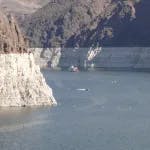
Then there are Interior’s responsibilities for management of the Colorado River. The agency appears to be treading water as the condition of the river system continues to deteriorate. Water news service Circle of Blue reports that Lake Powell, one of the two major manmade lakes on the river system, “is just a quarter full, and projected to drop lower this year. Winter has been a dud, with warm temperatures and a historically bad snowpack in the Colorado mountains that feed into the reservoir.”
Interior’s Bureau of Reclamation and the seven states that are members of the 1922 Colorado River Compact that governs its use have been deadlocked for over a year on a new management agreement. Most recently, BuRec gave the parties an ultimatum to reach a deal by February 14 (not on Valentine’s Day on purpose), or the feds would impose a solution.
March is here but no deal is near and BuRec has not appeared. The parties met with Burgum on January 30 to hash out a deal but left high and dry. Burgum has no special chops when it comes to water policy and BuRec has had no Senate-approved leadership in the current Trump reign. The administration made a nomination last June, withdrew it in September without explanation (it was regional politics), and has been silent since.
Arizona’s KTAR News reported last week (Feb. 25) that Arizona Democratic Sen. Reuben Gallego told a Tempe Chamber of Commerce meeting last week that a federal settlement would likely be better for his state than a regional agreement. The seven states in the compact are regionally divided into the upper basin water-supplying states — Colorado, Wyoming, Utah, and New Mexico — and the lower basin water using states — Nevada, Arizona, and California.
A voluntary settlement, Gallego said, “would have ended up having a disproportionate cut to Arizona. It would have affected our economy all the way up and down, whether it was from high-end manufacturing, to housing, to our agriculture community.”
