


By Kennedy Maize
The Trump administration’s determination to lean into coal, including preventing any existing coal-fired power plants from shutting down, economics be damned, is getting pushback from the folks immediately impacted: coal-burning electric utilities. The utilities charge that keeping old, inefficient coal-fired plants running hurts their customers in the pocketbook and the companies on the bottom line.
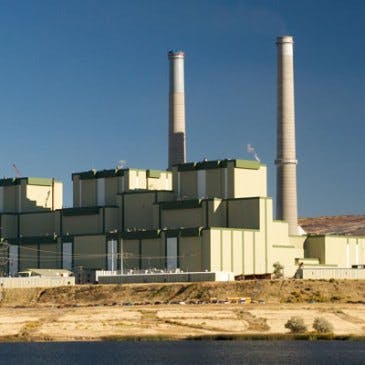
On January 29, Colorado’s Tri-State Generation and Transmission Association, Inc., and Platte River Power Authority, two public power systems, challenged the Department of Energy’s December 30 order to keep Tri-State’s 427-MW coal-fired unit 1 at the Craig (Colo.) Generating Station in service a day before it was scheduled to shut. The public power systems asked DOE to reconsider its action, a preliminary step before going to court.
The challenge said DOE’s action was a physical and regulatory “taking” without due process, violating the U.S Constitution, the Administrative Procedures Act, and the Federal Power Act. DOE’s justification for its actions — a reliability emergency — was a pretext without substance, the public power petitioners said.
In order to use emergency authority, the challenge states that “the government must do more than reference the word ‘emergency’—rather, it must show that the kind of emergency that requires such fast-moving action has occurred. The Order’s asserted emergency is no such emergency. And the Order disrupts a considered resource planning effort.”
Tri-State had been planning for a decade to shut down the 1980-vintage unit, which had recently been performing poorly, according to its owners. As part of its actions to close the unit, Tri-State said it “has taken the steps necessary to plan for a reliable system that would have a planning reserve margin of at least 22% even with the retirement of Craig Unit 1, for which its Utility Members have paid.”
Scrapping the planned closure in order to comply with the DOE order is imposing illegal costs to the customers. Tri-State said it has had to replenish the coal pile, which it had let unsupplied in anticipation of closure. “The only practical source of fuel for Craig Unit 1 to maintain readiness after its planned retirement, and to make use of in the event of a dispatch, are Craig Units 2 and/or 3’s previously acquired and allocated reserves,” according to the filing. “This too constitutes a taking.”
All the considerable steps the owners had to take to keep the plant running cost money. In addition, the filing says, DOE’s came “with no economic benefit available from retaining the to-be retired facility because it is uneconomic to operate.”
Moving west to Washington state, On December 16, DOE ordered Canada’s TransAlta to keep its 730-MW Centralia coal-fired power plant near Hanford, Wash., commissioned in 1972, to stay in service beyond its 2025 closure. DOE used the standard boiler plate language in all of its closure orders, which claim the orders are based on its analysis of the impact of the closures on reliability of electric service, despite no indications that reliability was an issue in the electricity-rich Pacific Northwest
TransAlta shut the plant on December 19, flouting Energy Secretary Chris Wright’s order. As regional news service OPB reported, the state immediately challenged DOE. The Washington Attorney General’s office asked DOE to back off of its emergency order, citing a 2011 stte law requiring Centralia to shut down by the end of 2025 and a 2019 law prohibiting utilities in the state from selling coal-based power after 2025.
Attorney Kelly Wood in the AG’s office said, “There’s no emergency, The authority that they’re drawing upon here is reserved for times of war and times of actual, imminent emergency situations. So think of things like hurricanes, earthquakes.” Wood added, “The notion that there’s some imminent threat of power loss in the Northwest is just false. It’s been a very wet season so far, and our reservoirs are all above capacity, and so hydropower is very abundant currently.”
Since May, Wright has ordered five coal-fired power plants scheduled to close to stay operating. It began with Consumer Energy’s 1,500-MW J.H. Campbell plant in Michigan, with a 90-day order to keep operating, citing section 202(c) of the Federal Power Act. DOE has now twice extended the order and is likely to impose a fourth order this spring. The utility says the order is costing it and its customers $30 million/month. In no case, did the regional transmission organization, Midwest Independent System Operator, see any reliability issues without the Campbell plant in operation.
The Washington Post, which has not often been a critic of the Trump administration, editorialized against DOE’s emergency overstepping on coal, headlined: “Trump’s pro-coal directives could raise energy prices by billions.”

The Post commented, “Requiring aging plants to operate after their scheduled closures hurts consumers, who pay the price. President Donald Trump is protecting the coal industry from market forces, driving up utility bills for Americans.
“On energy policy, the administration’s most obvious sin has been picking losers. It has attempted to halt construction for offshore wind developments, even some that were nearly complete, and suffocated massive solar projects with red tape. As the nation clamors for more electricity, this oppositional attitude makes no policy sense.”
The underlying irony of this story is that Chris Wright, before he came to Washington, did more to undermine coal’s dominance in electric generation over the last 20 years than all the U.S. environmental and climate activists combined. His approximately $100 million net worth is a result of his early and significant involvement in developing and using hydraulic fracking technology to release enormous amounts of low-cost natural gas that quickly dethroned king coal.
