


By Kennedy Maize
In 1972 Congress created the Federal Advisory Committee Act (FACA). In 2026 the Federal Advisory Committee Act dope slapped Energy Secretary Chris Wright upside the head for creating a secret, illegal advisory committee to tell him what he wanted to hear about climate change.
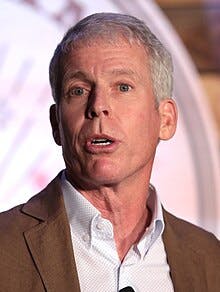
Last year, Wright assembled a group of five climate experts who have consistently challenged the conventional wisdom about the impacts of a warming planet. All are credentialed, credible, and engaged. They serve to balance some climate scientists who view climate change as an “existential” threat to the globe, which has become the most influential view.
They take stands that echo Wright’s stated views that “Climate change is real, and it deserves attention. But it is not the greatest threat facing humanity. As someone who values data, I know that improving the human condition depends on expanding access to reliable, affordable energy.”
Wright’s views are, of course, at odds with those of his boss, Donald Trump, who promotes a lie that climate change is a “hoax.”
In order to bolster his views, Wright secretly assembled the group of experts he knew agreed with his views, dubbed the Climate Working Group. He commissioned them to write a report reflecting his somewhat contrarian stance. They worked in secret, with no meeting notices, meeting records, or public review. DOE specifically attempted to dodge the 1972 advisory committee law. The agency said the group was simply “assembled to exchange facts or information.” He released their 151-page report on July 29.
As described by the Library of Congress, FACA was born “to ensure that advice by advisory committees is objective and accessible to the public. Committees must be fairly balanced in viewpoint and contain experts, members of the public, and have a Designated Federal Officer from the sponsoring agency.”
The Wright report was clearly designed to influence the Environmental Protection Agency’s long-standing effort to repeal its 2009 “Endangerment Finding” that has long underpinned the government’s climate policies and programs. Reuters reported, “The group’s existence was not publicly disclosed when the Department of Energy released the report it drafted on July 29, the same day the EPA formally proposed a rule that would rescind the Endangerment Finding.” EPA hoped to issue a final rule by the end of 2025.

The Environmental Defense Fund and the Union of Concerned Scientists immediately sued DOE, charging that the Wright group violated FACA. On January 30, six months after the Wright report was revealed, Judge William Young of the U.S. District Court for Massachusetts granted summary judgement that DOE had run afoul of FACA.
In a short four-page order, Reagan appointee Young ruled that the “Climate Working Group was a Federal Advisory Committee, and not merely ‘assembled to exchange facts or information,’ but rather provided substantive policy ‘advice and recommendations’ to the Department of Energy.”
Young noted that DOE “had not denied, for example, the specific allegations that the Climate Working Group violated FACA’s requirement for establishing and utilizing an Advisory Committee, holding open meetings, providing open records, and maintaining fair balance and influence. These violations are now established as a matter of law.”
The environmentalists had included EPA and Administration Lee Zeldin in their filing. Young ruled that he “found no persuasive evidence of conduct violative of the FACA on the part of any entity outside the Department of Energy and Secretary Wright.”
EDF attorney Erin Murphy said, “The federal court’s ruling is absolutely clear – the Trump Administration violated federal law by secretly convening a group tasked with developing a dangerously slanted report to use as the basis for attacking the endangerment finding, the long-standing determination that climate pollution endangers our health and our lives and requires commonsense action.”
Perhaps worst of all, and not subject to judicial scrutiny, was not just that Wright’s Climate Working Group fiasco was illegal but that it was fundamentally stupid. Wright could have followed FACA, convened a group consisting of his experts and their often hyperbolic opponents who get more media attention, as well as public members. They could have produced a report that offered a balance of competing views, let EPA short it out, and not damaged Wright’s slipping reputation.
As for the endangerment finding, the Washington Post reported last week (Jan. 29) that the Trump administration is facing an internal battle over what the White House had hoped would be one of its major environmental moves in repealing the EPA’s formal policy direction. Citing two sources who requested anonymity, the Post said, “Trump officials have delayed finalizing the repeal of the agency’s ‘endangerment finding’ over concerns the proposal is too weak to withstand a court challenge.”
The Post account pointed to the White House’s Office of Information and Regulatory Affairs (OIRA) as expressing “concerns over the strength of the scientific and economic analysis of the proposed repeal, the people said.
“EPA officials are resisting revisions to the policy and arguing that the regulation should be finalized and announced publicly in its current form as soon as possible, they added.”
Politico’s E&E News independently reported on the administration’s internal endangerment battle: “The deliberative work happening behind closed doors at the Office of Information and Regulatory Affairs pits the administration’s desire to quickly scrap EPA’s endangerment finding, which underpins many of the agency’s climate change regulations, against the imperative to ensure those actions can survive legal scrutiny. The attempt to repeal the finding is shaping up as the Trump administration’s single-biggest — and riskiest — swing at the federal government’s ability to fight rising temperatures linked to fossil fuels.”
